The post Praying Mantis Summer School appeared first on Leslie Abram Photography.
]]>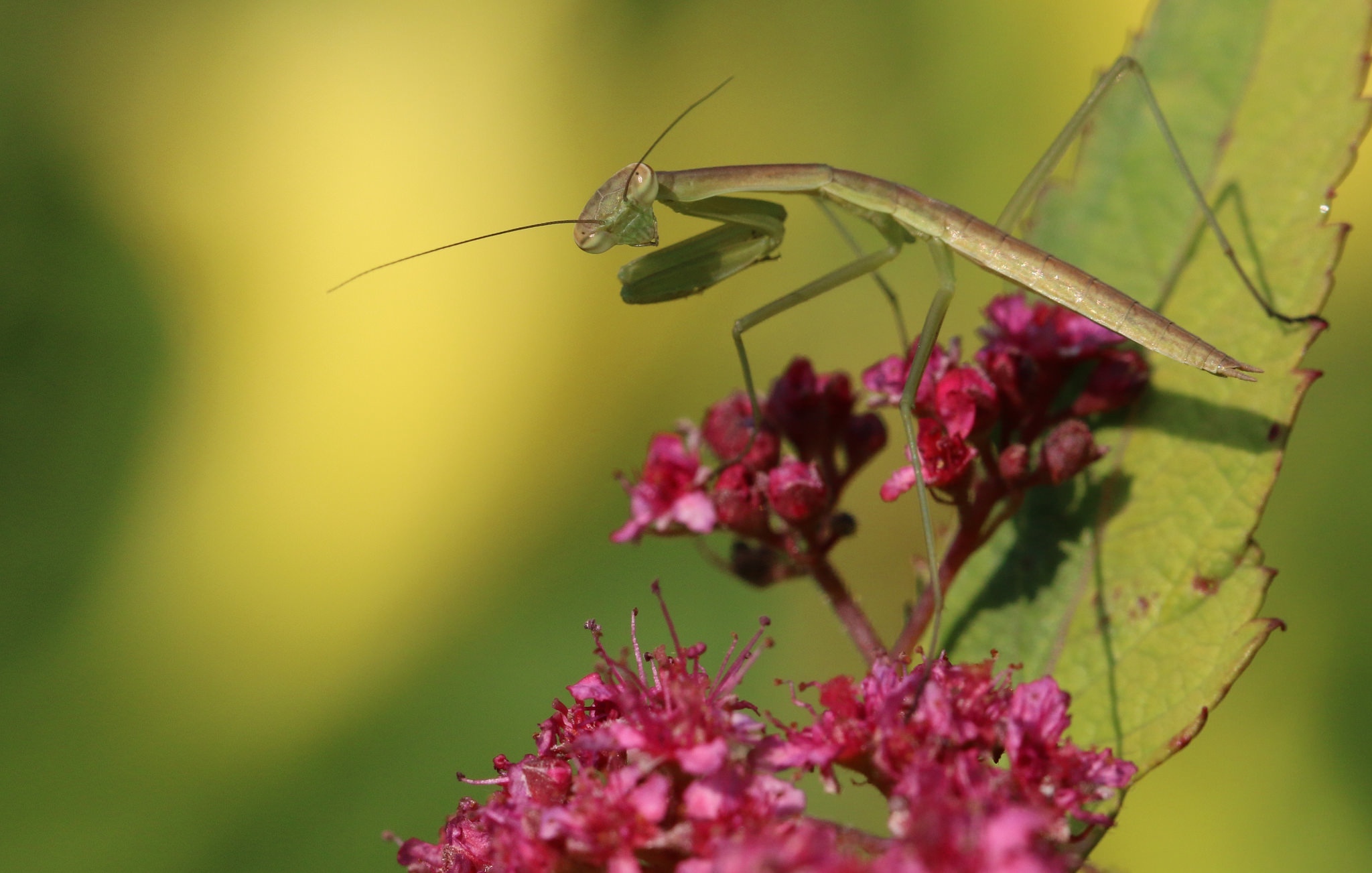
A random purchase of a praying mantis egg case at our local garden centre led to a fascinating summer sharing my garden with a family of praying mantids.
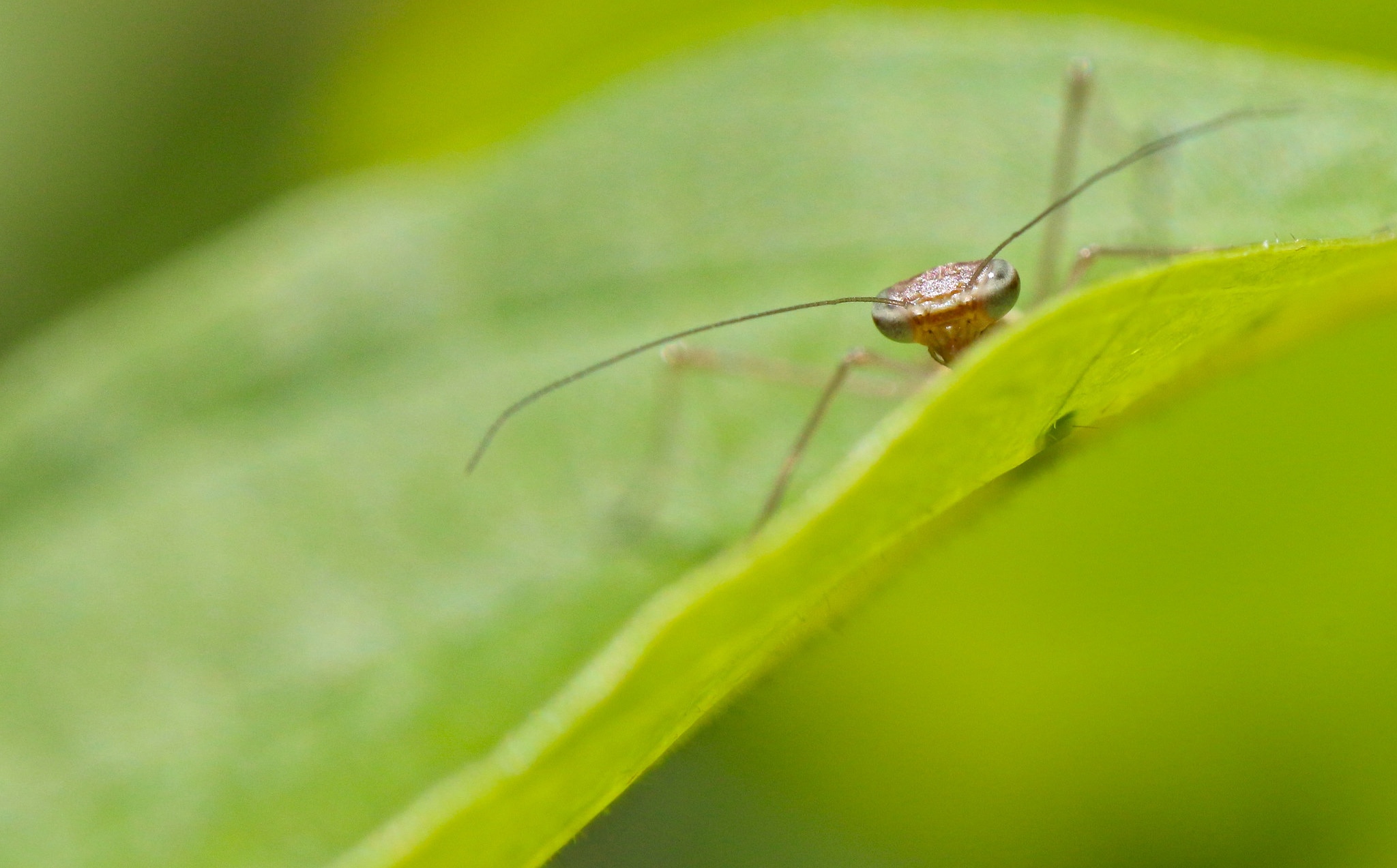
When these little predators emerged by the dozens from their egg case in early summer, they were about the same length as a pinky fingernail.
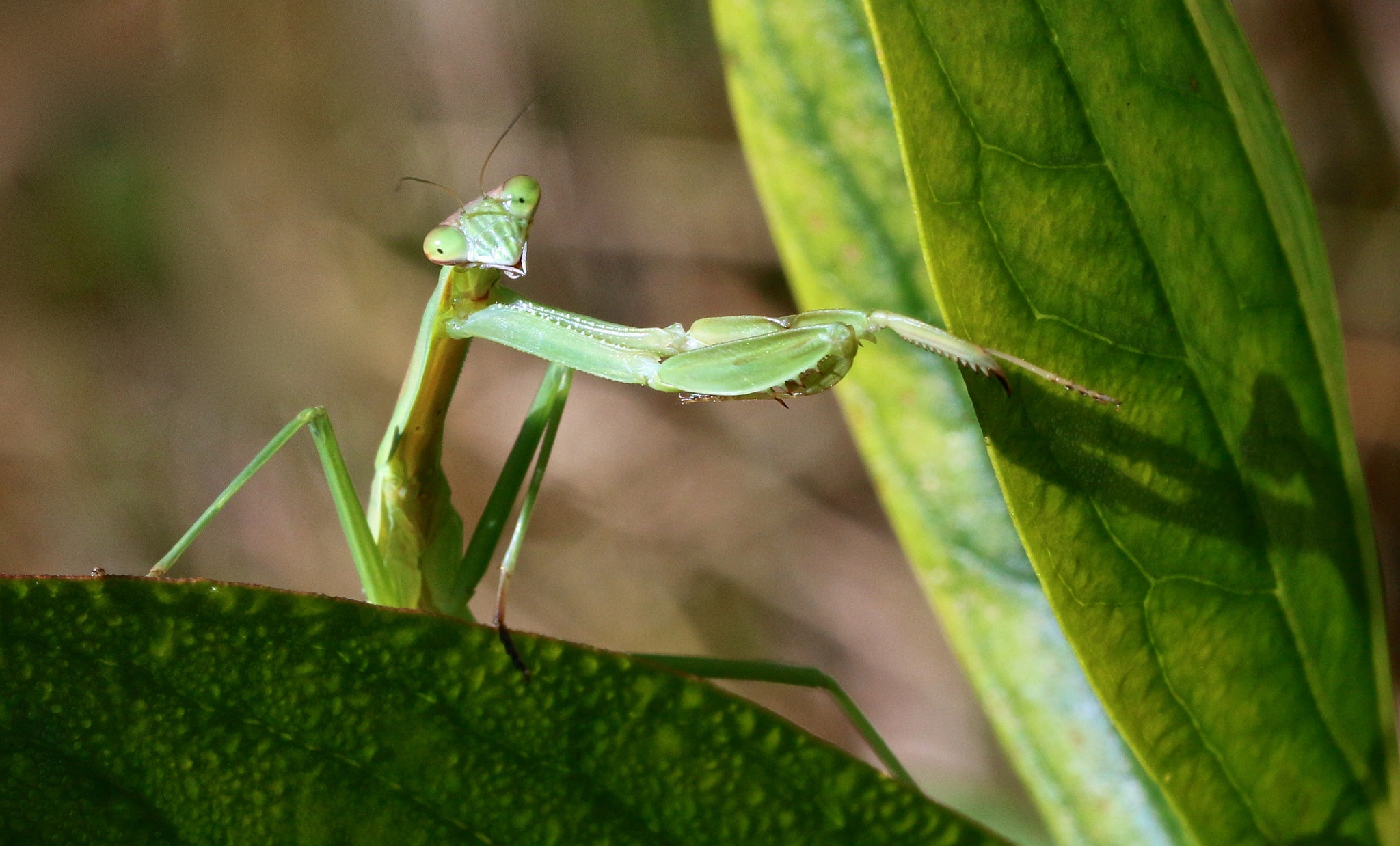 Insanely photogenic, they became the main subject of my photography. Along the way, I learned more and more about the lives of these formidable hunters.
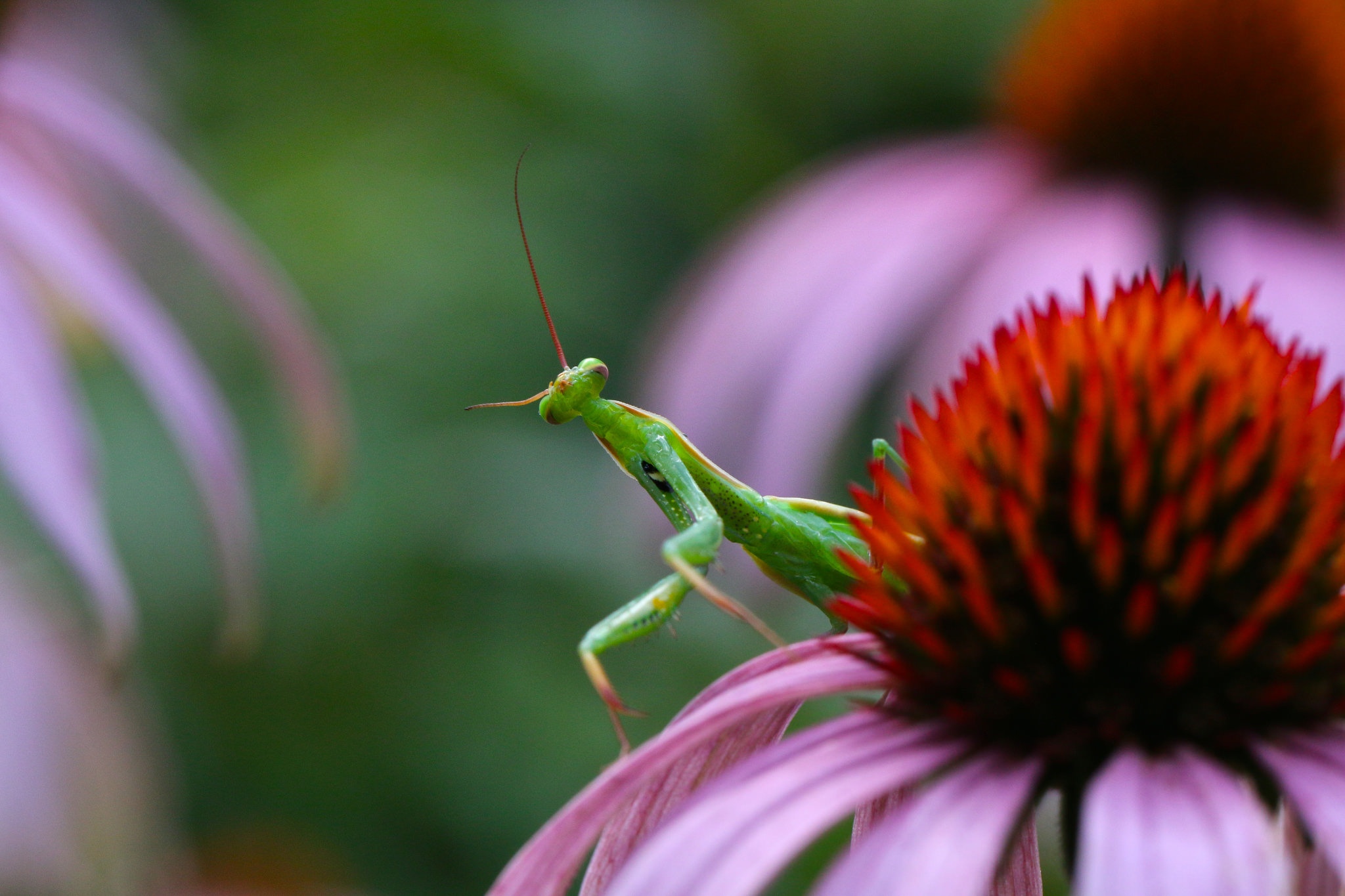
Did you know that we have no native species of praying mantis in our part of the world? The ones we see are either European mantids or Chinese mantids. The European mantids (above photo) have smooth faces and a very distinctive black and white mark in their armpit. When their arms are outstretched, these marks look like big eyes and can be used as a threat display.
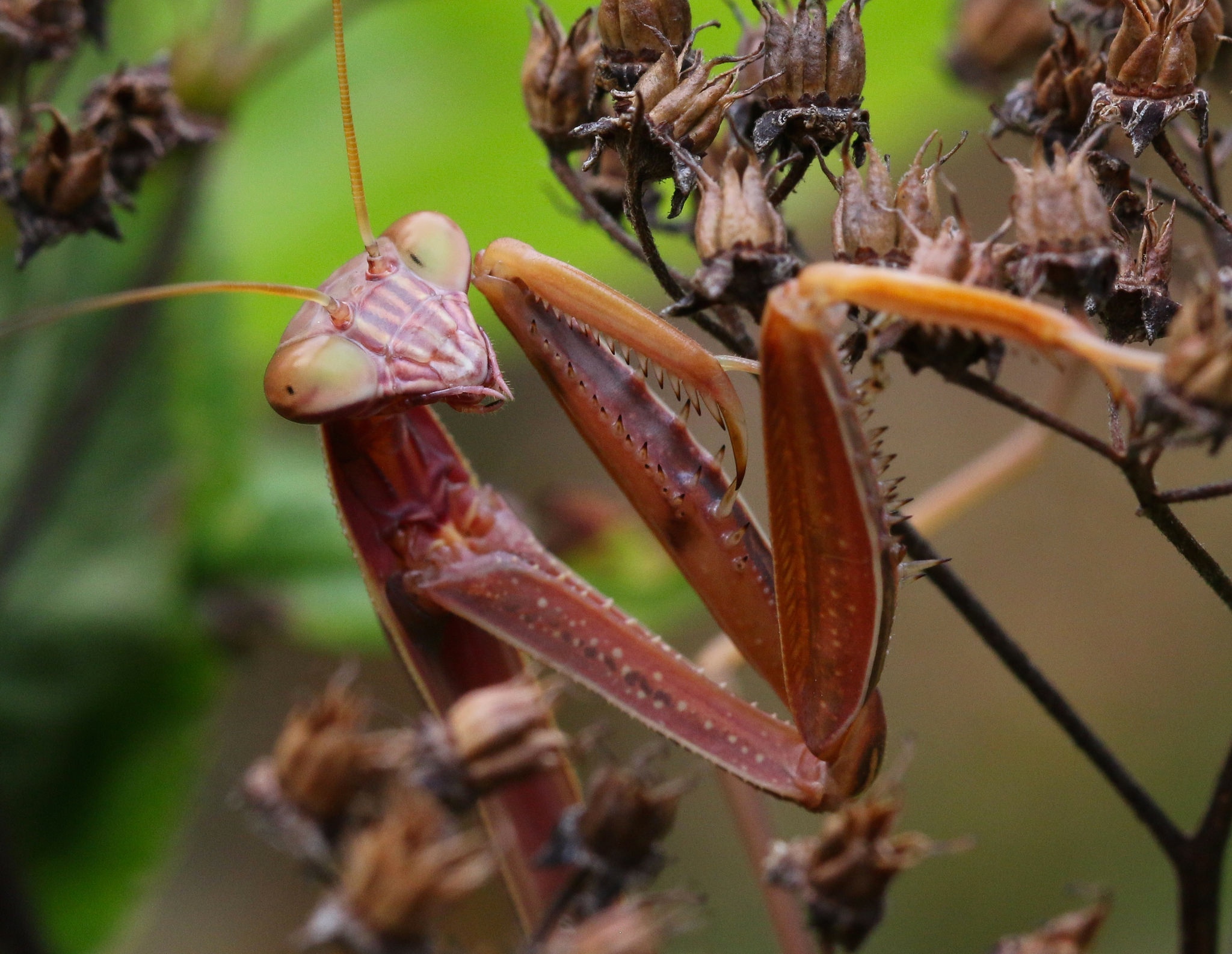
Chinese mantids have a distinctly ridged face.
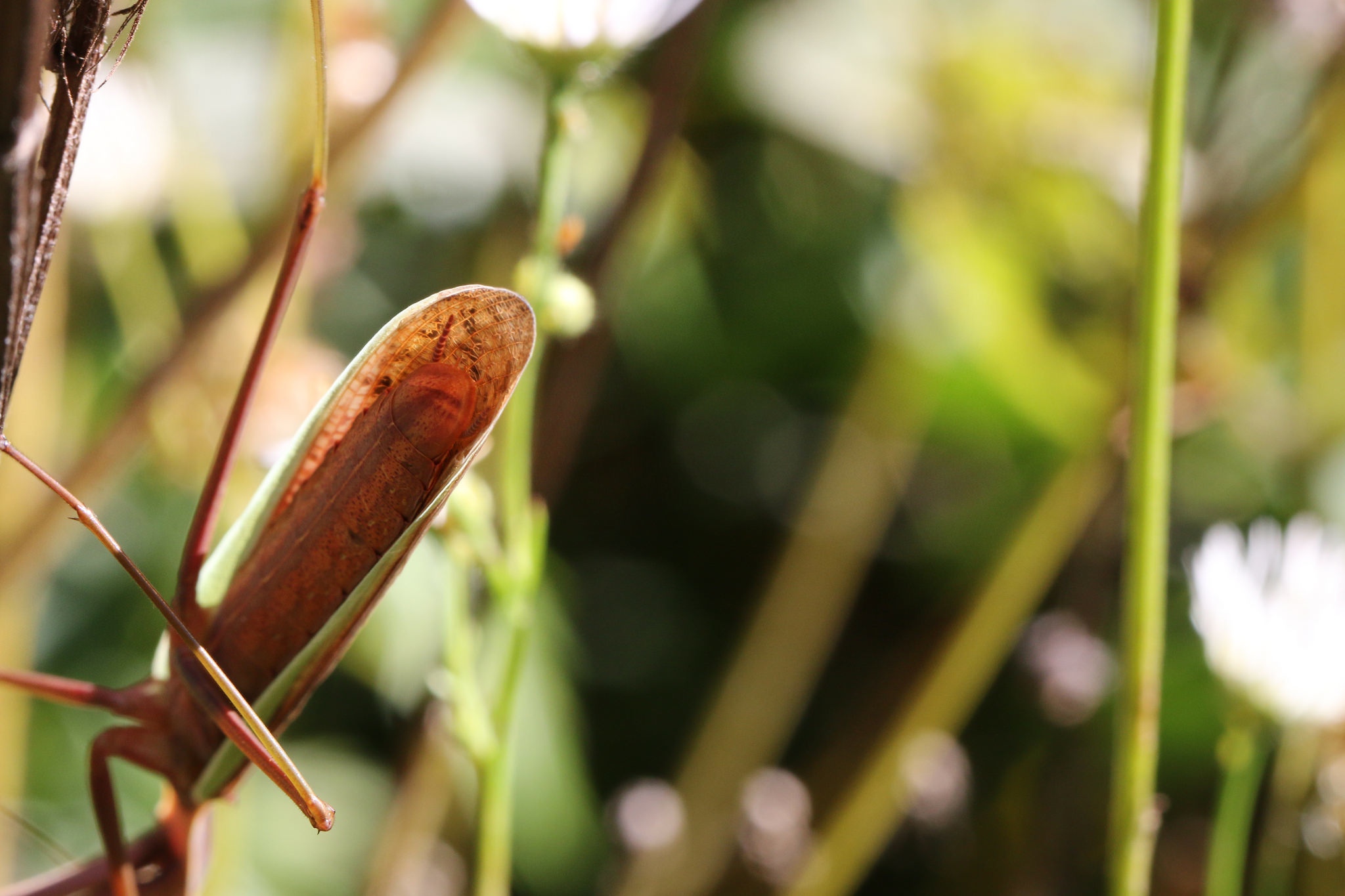
They also have a bright green edge around their wings.
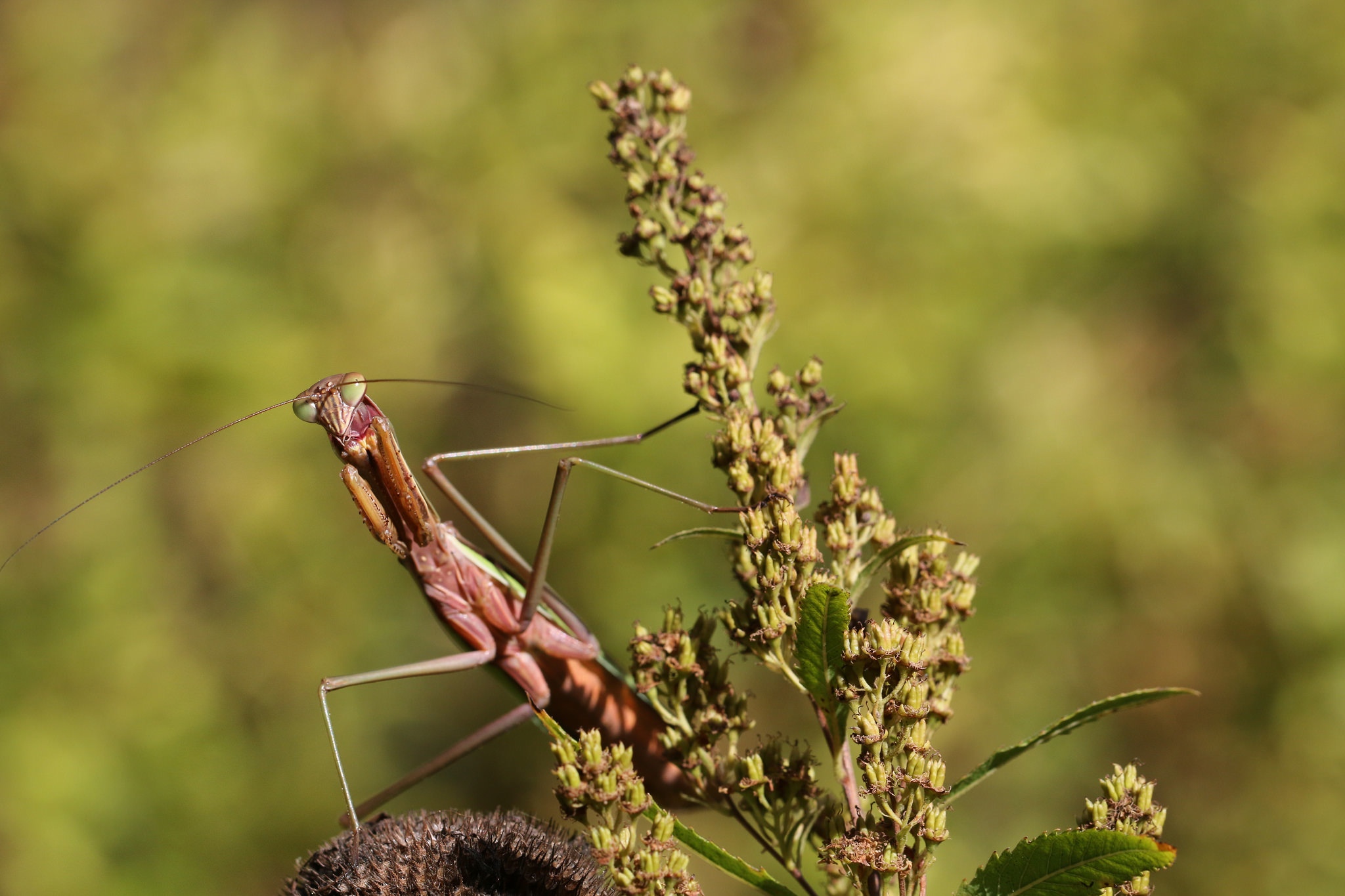
I am pretty certain that the egg case that I bought was full of Chinese mantids, as the majority of the insects in my garden had these characteristics. The European mantids must have been locals. Both species come in green and brown.
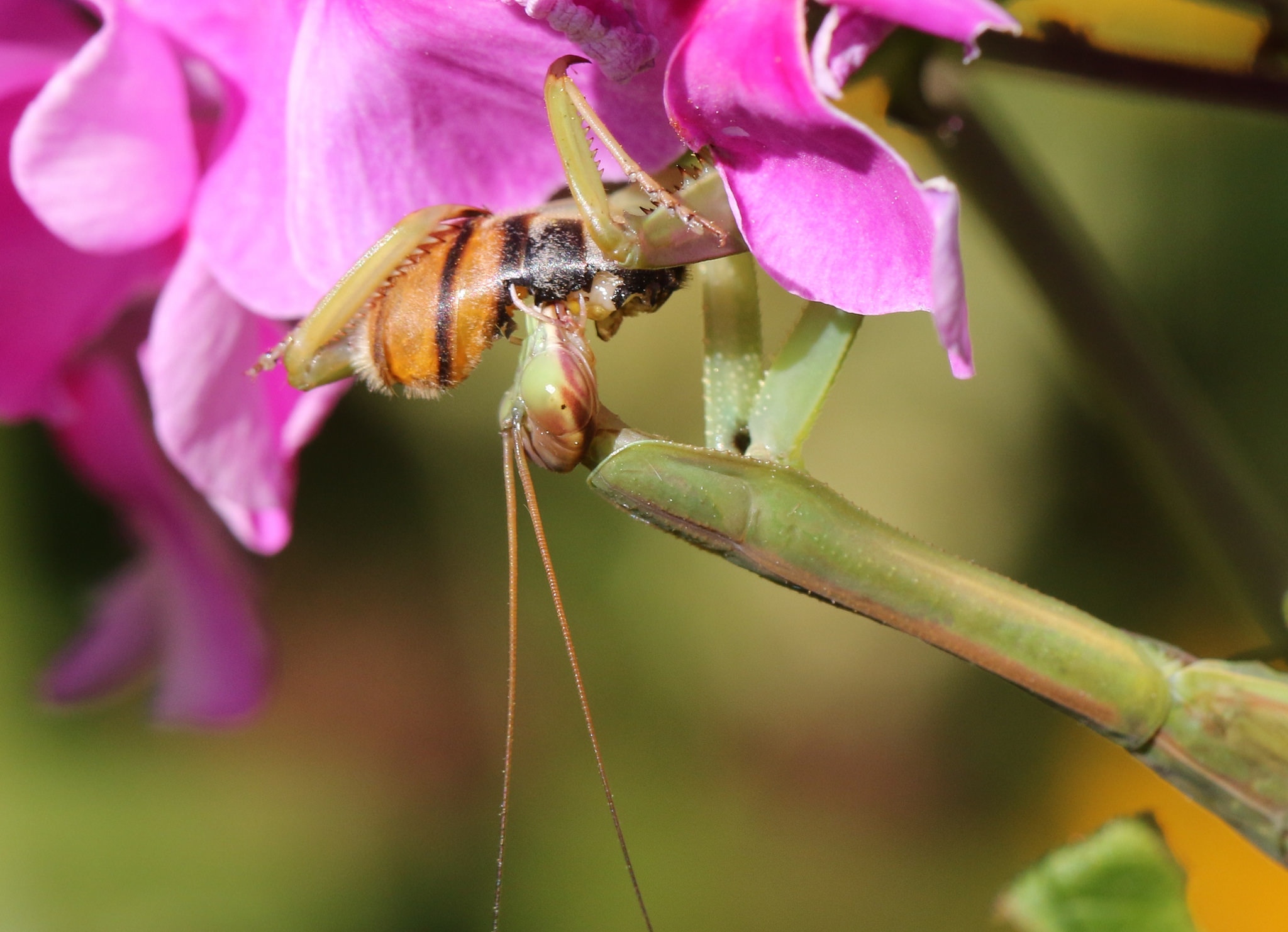
These are not invasive species- they were introduced to control pests in the garden. Word on the street is that they are not really a beneficial insect- they might be better classified as having a “neutral” effect. This is because they will eat just about anything that crosses their path- including honey bees, native bees. and other pollinators.
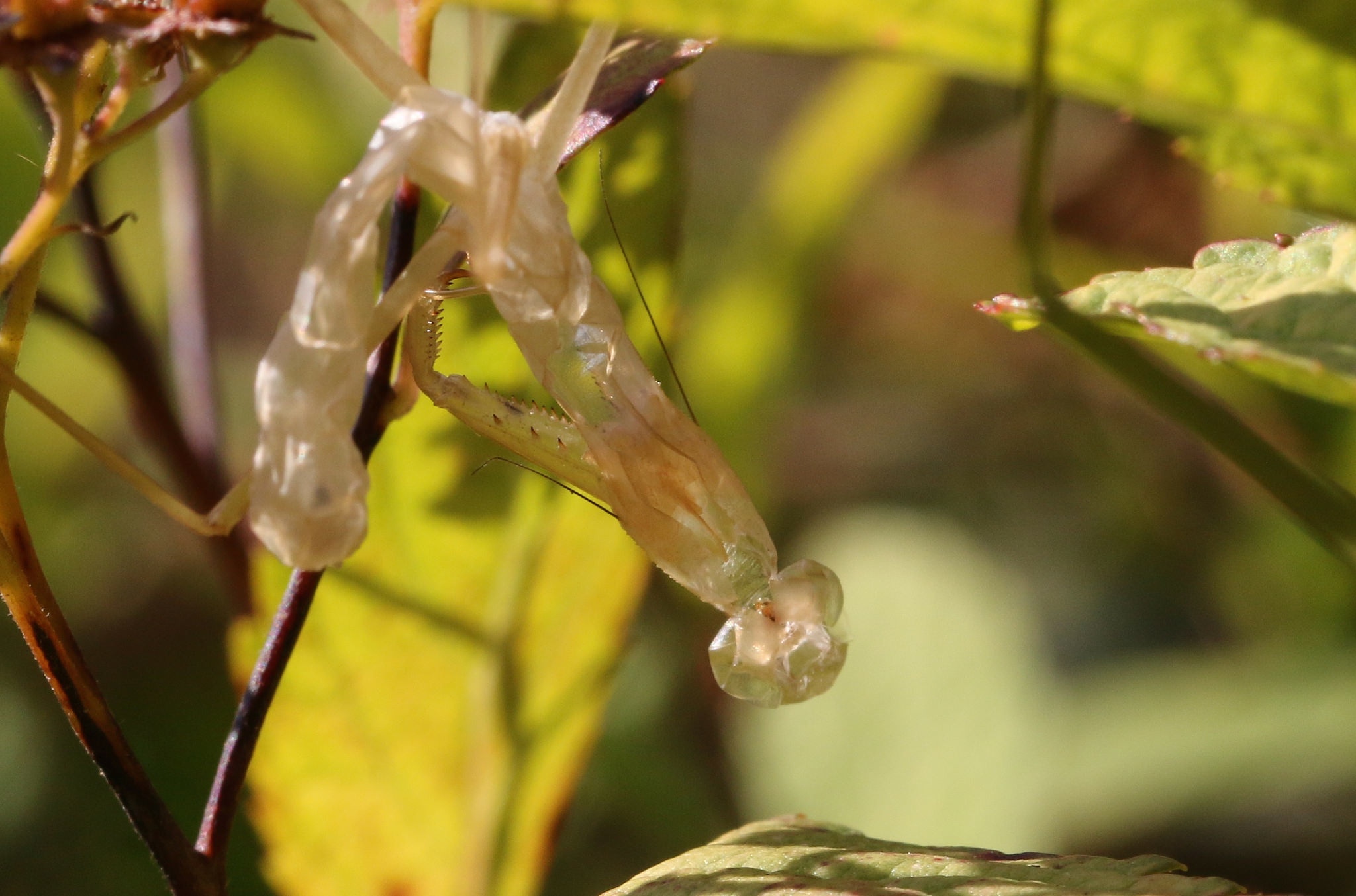
This is a praying mantis skin.
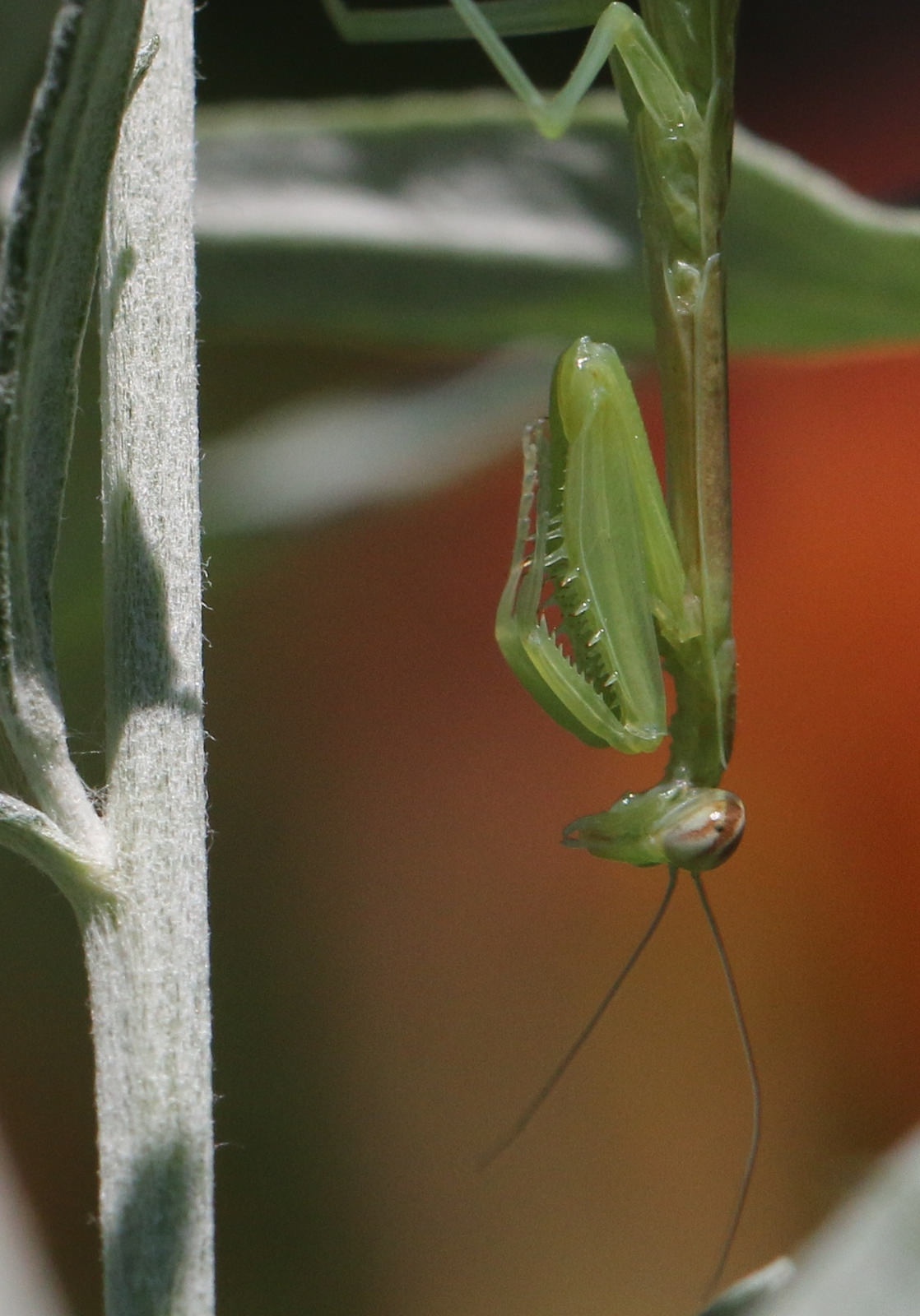
From what I observed, they shed their skins at least 4 times over the summer as they grew. They would hang very still upside down from a leaf or stem, and turn quite grey looking. Once the old skin was off they would walk a couple steps away and hang to rest, with a beautiful fresh skin, like in the photo above.
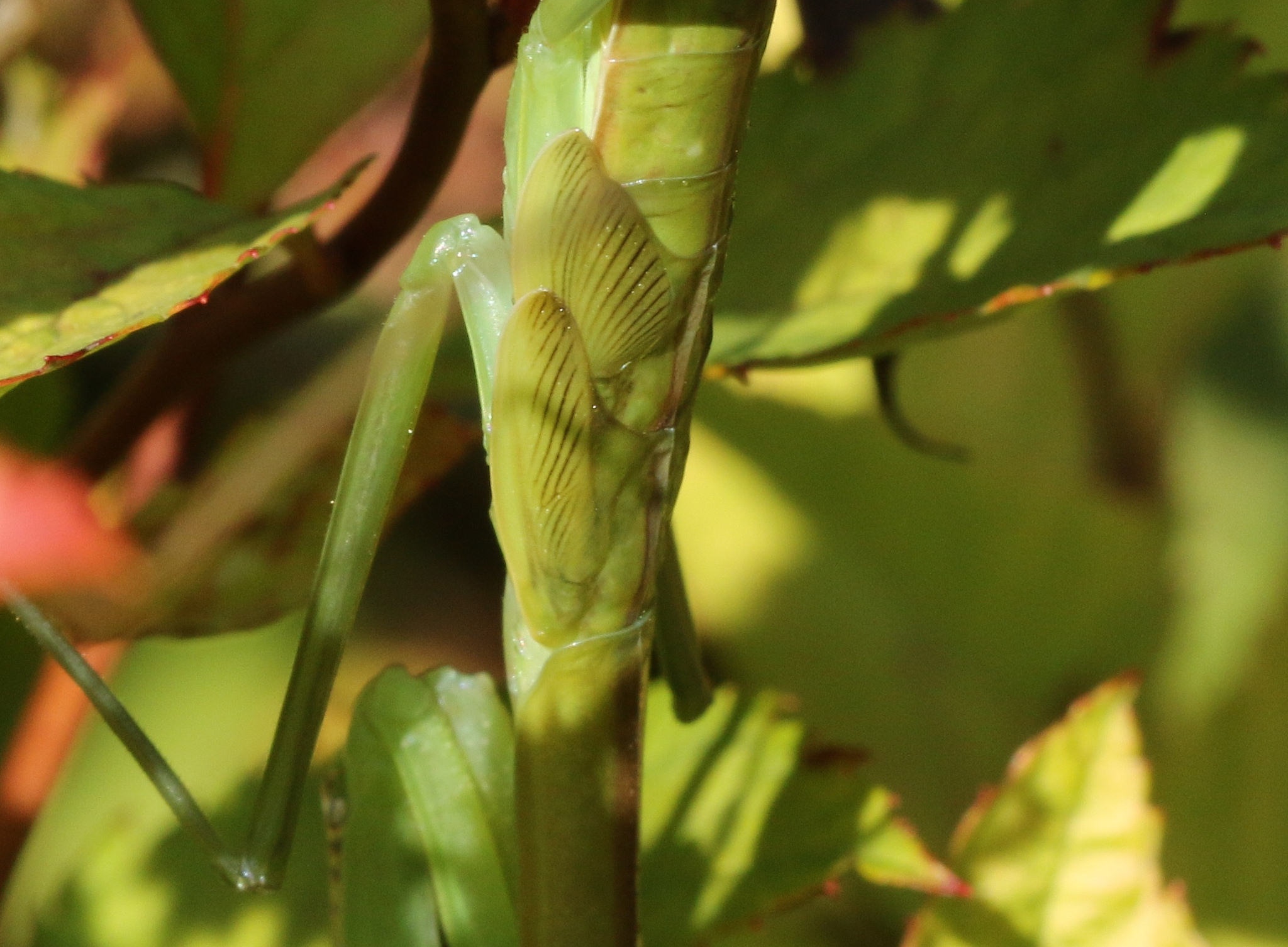
It took until late in the summer for the mantids to start to develop wings.
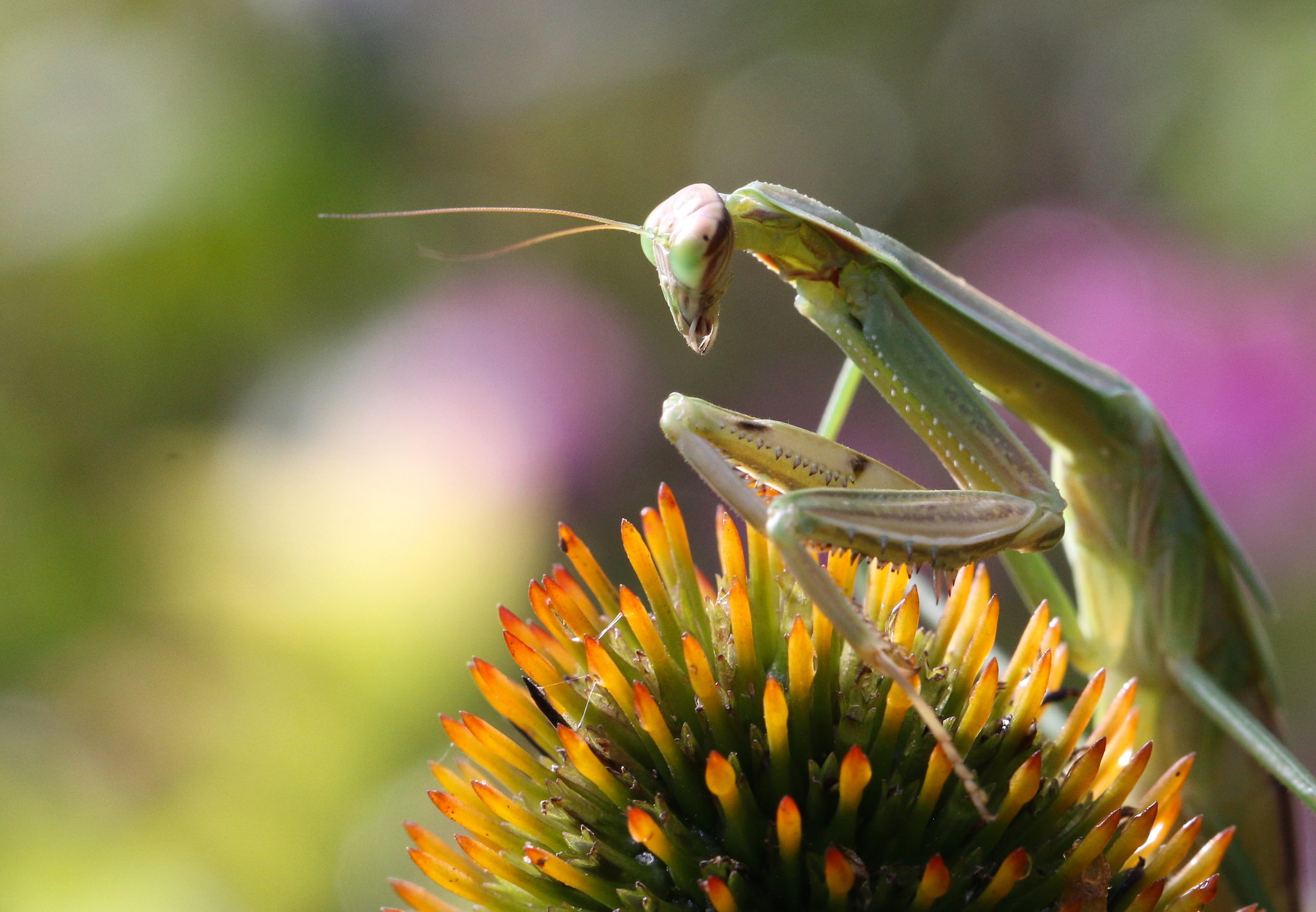
We had a nice warm fall here, with plenty of time for the mantids to mature and mate. I did not observe any mating behaviour but I did notice that one day about 8 of the mantids had gathered in one bush. I read that the females will send out pheromones to call the local males in, so maybe this is what was happening that day.
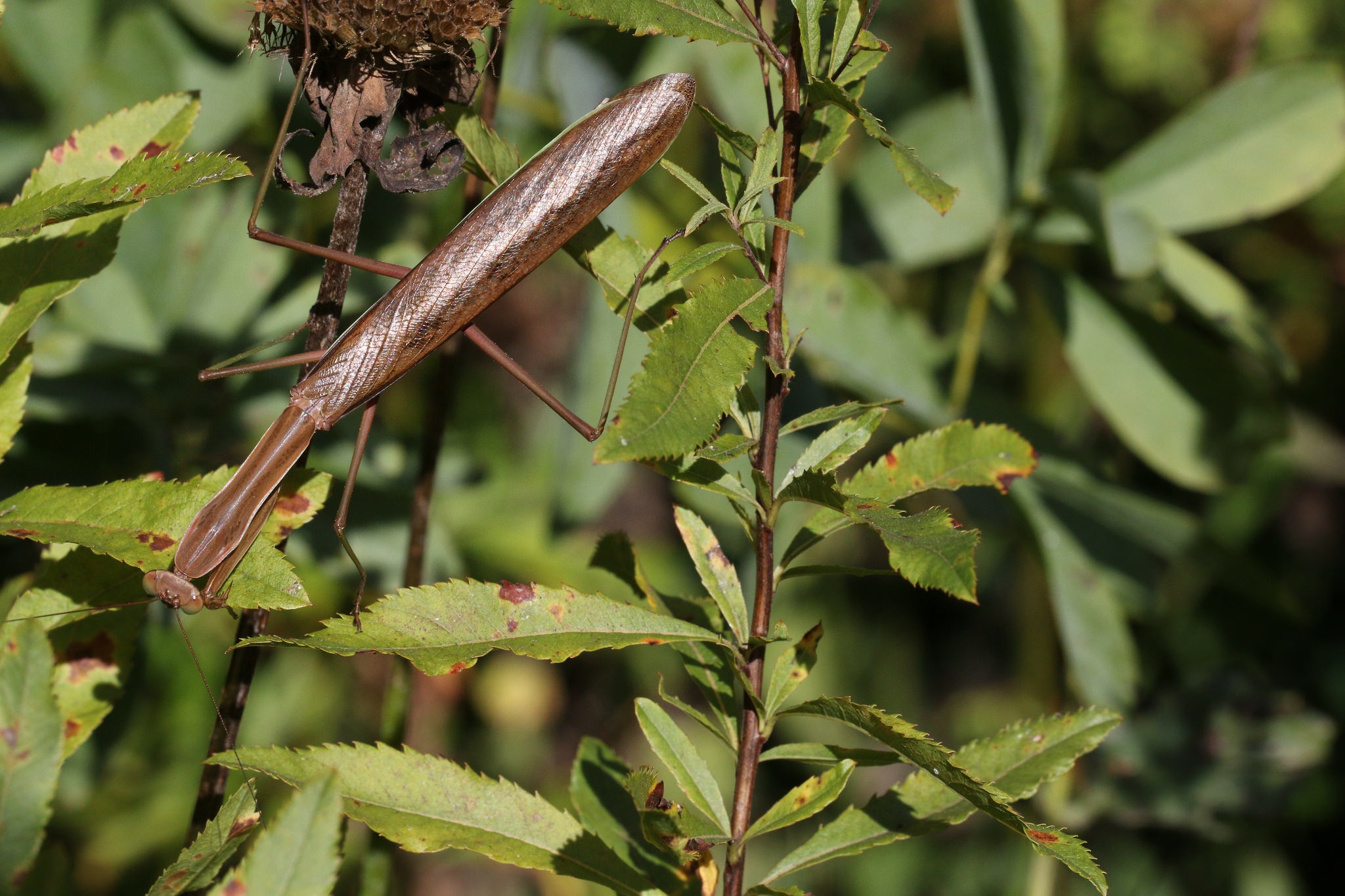
Females will decapitate males during mating, and even eat them afterwards. All the mantids will die after the first hard frost, and overwinter inside egg cases. The female lays her eggs on the stem of a plant like goldenrod, then covers them in a foam that then hardens into an egg case that will protect the eggs through the winter. It’s my hope that there are some egg cases out in my garden right now under the snow, and that I will have even more praying mantis action in my garden come the warm days of summer.
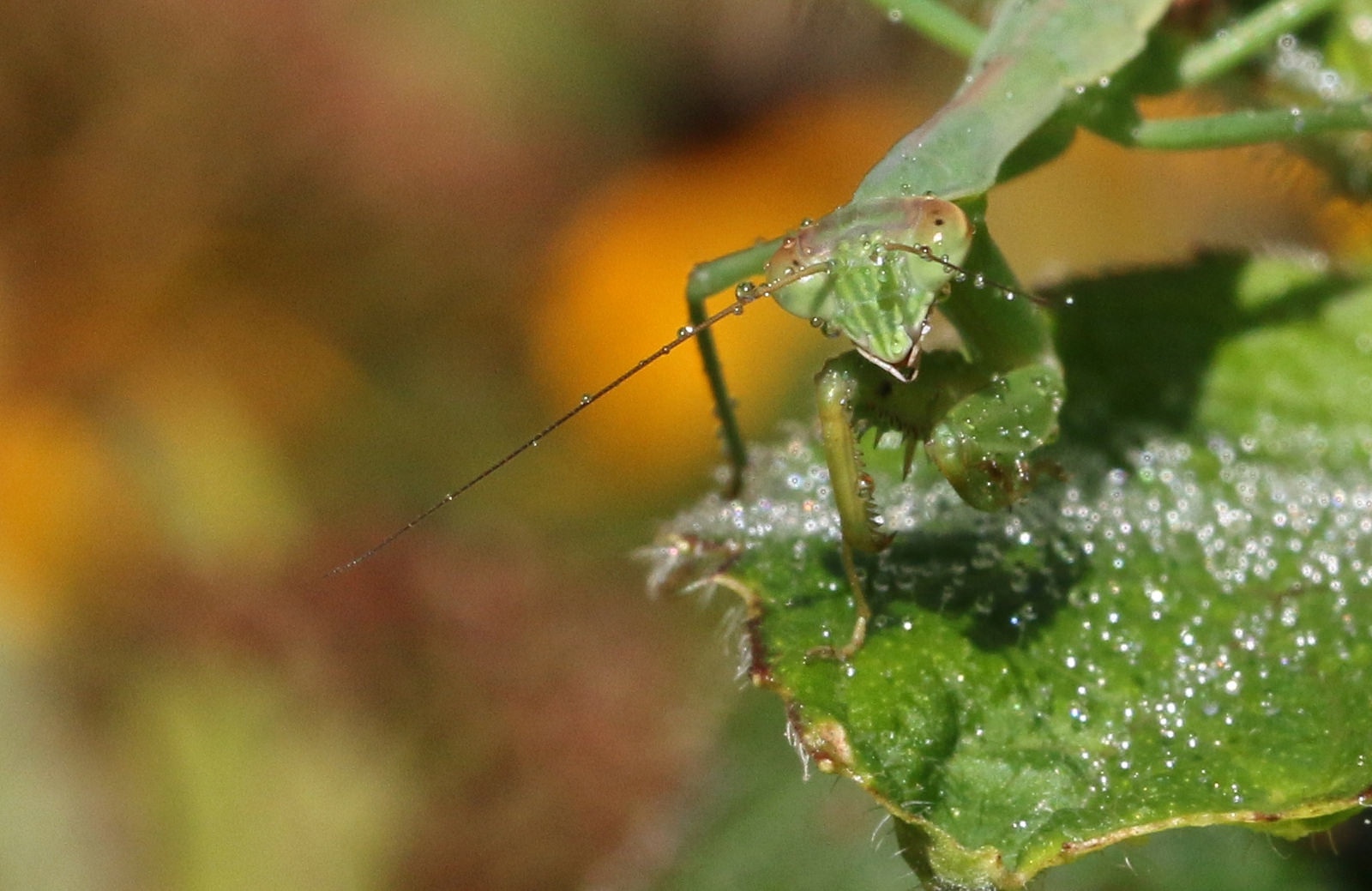
There is no doubt that looking for the little predators early each morning was part of my summer routine. They set up territories in certain plants in my garden, so they were pretty easy to keep an eye on as they grew. We shall see what next summer brings.
Thanks for visiting! Have you ever seen a praying mantis in your garden?
Leslie
The post Praying Mantis Summer School appeared first on Leslie Abram Photography.
]]>The post Photo Show December 9 to benefit Fixed Fur Life Animal Rescue appeared first on Leslie Abram Photography.
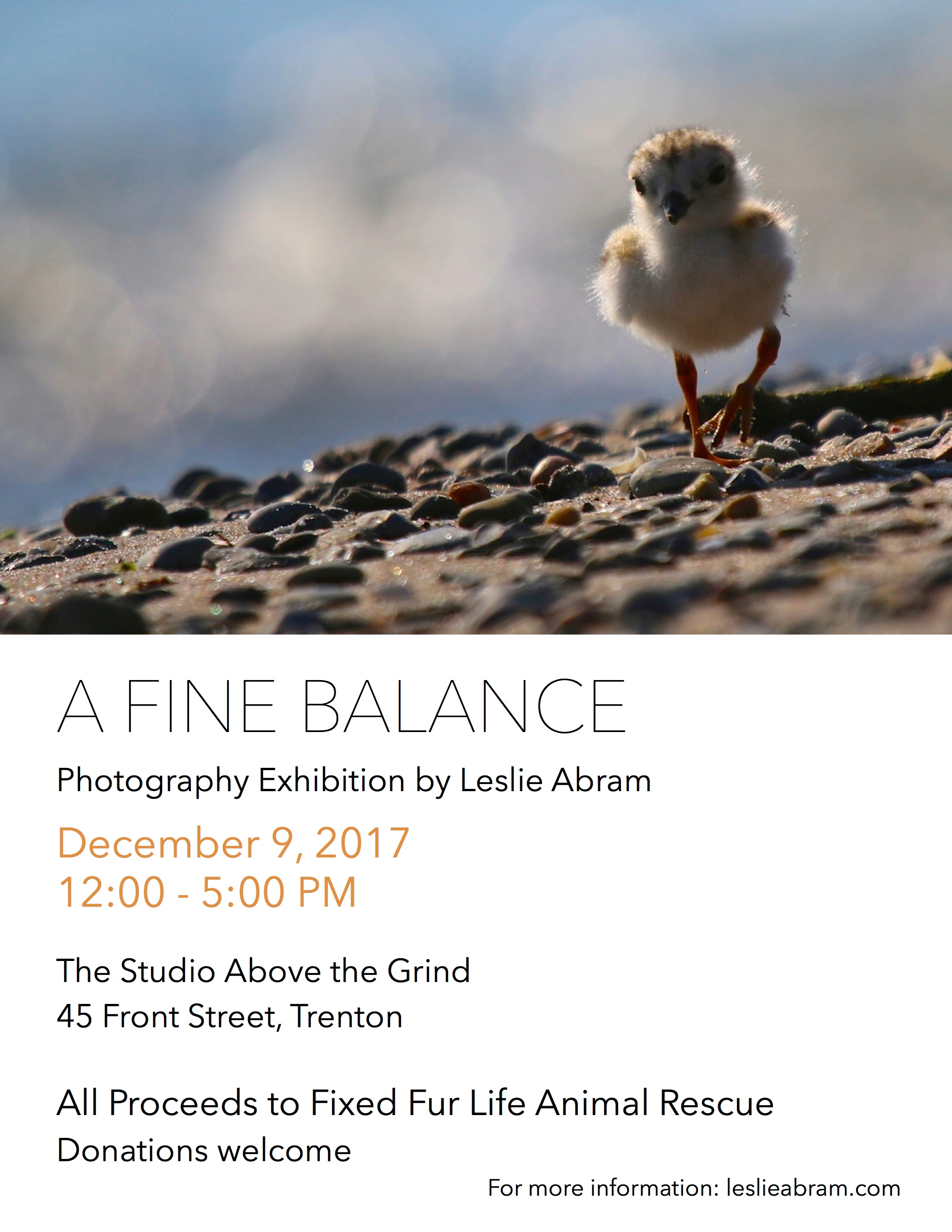
]]>Please join me as I take a look at the fine balance all creatures on earth need to strike to ensure their current and future survival. Explore how our actions and daily choices can have a big impact on lives of the creatures that live in nature with us.
All proceeds to Fixed Fur Life. A limited number of prints will be available for purchase, as well as my 2018 wildlife calendars.
Please contact me with any questions or if you’d like me to reserve you a calendar. [email protected]
The post Photo Show December 9 to benefit Fixed Fur Life Animal Rescue appeared first on Leslie Abram Photography.
]]>The post Bioblitz! appeared first on Leslie Abram Photography.
]]>Imagine a bunch of people all heading out into the same area for a day, trying to find and identify as many living things as possible.
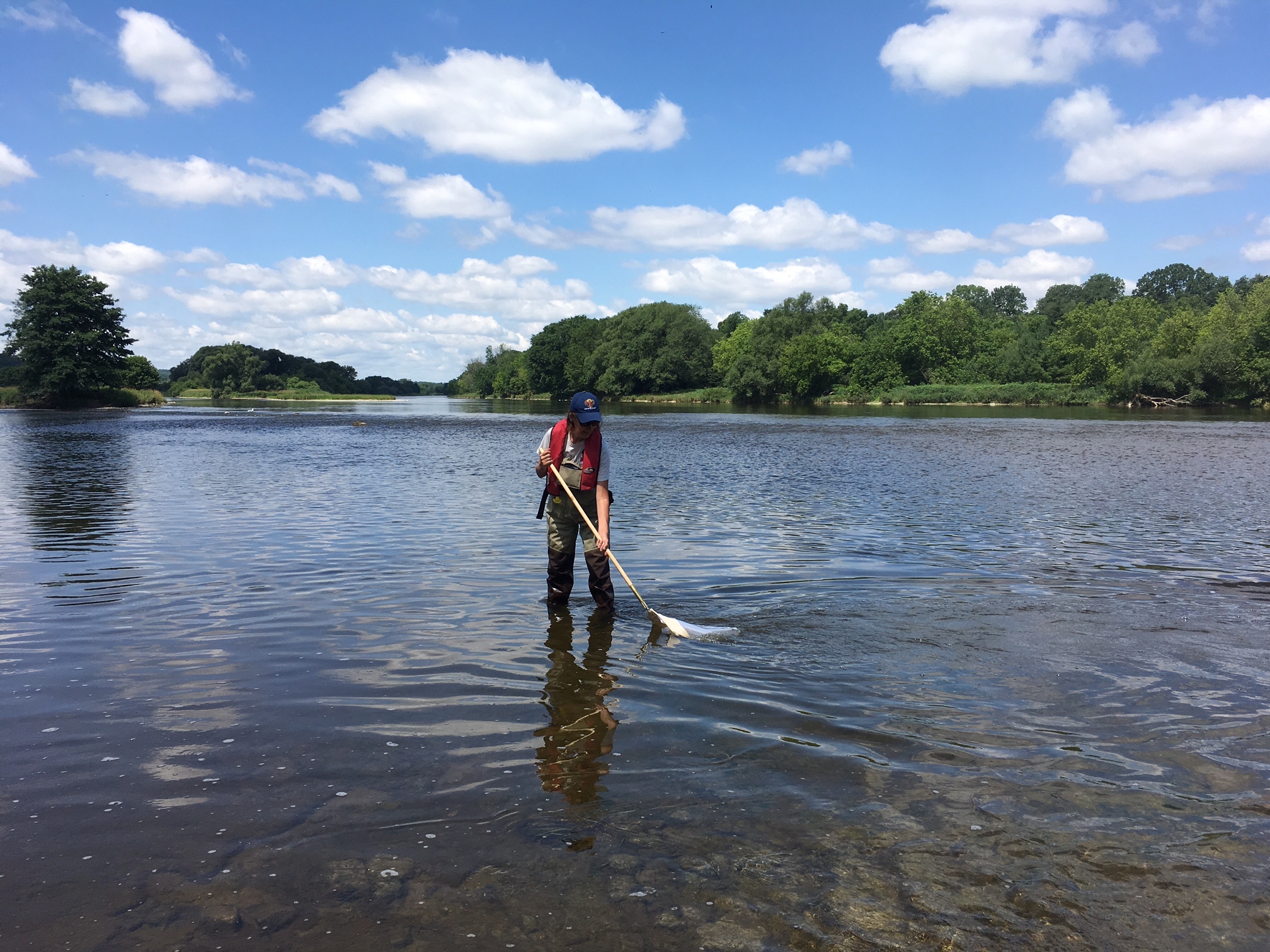
Me- dragging the bottom of the Grand River
That is my kind of day!
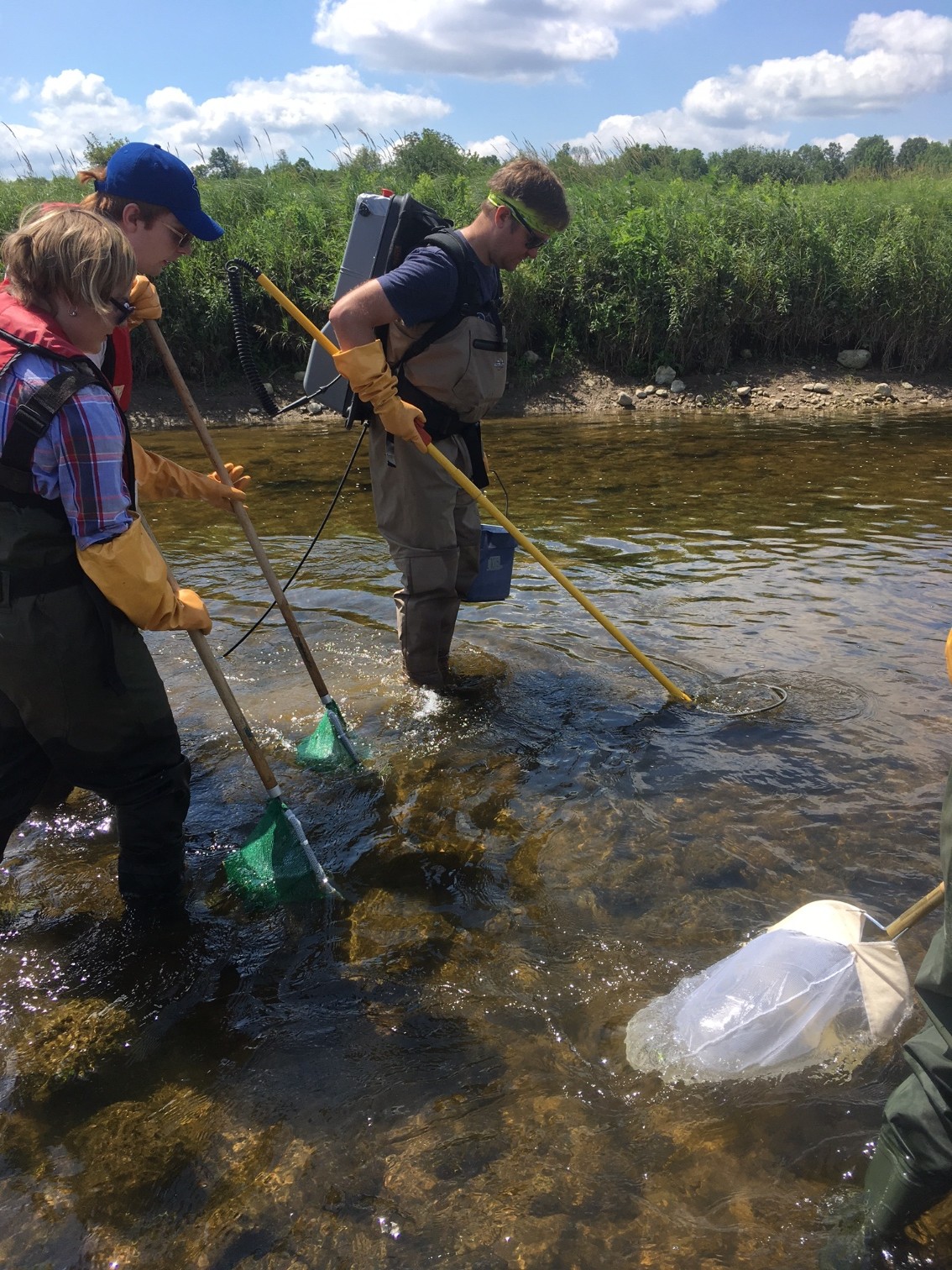
Electrofishing
Different groups and individuals go out looking for different flora, fauna and fungi, such as aquatic invertebrates and fish, insects, birds, plants, fungi, mammals, reptiles, and amphibians. Local experts help out with the identification.
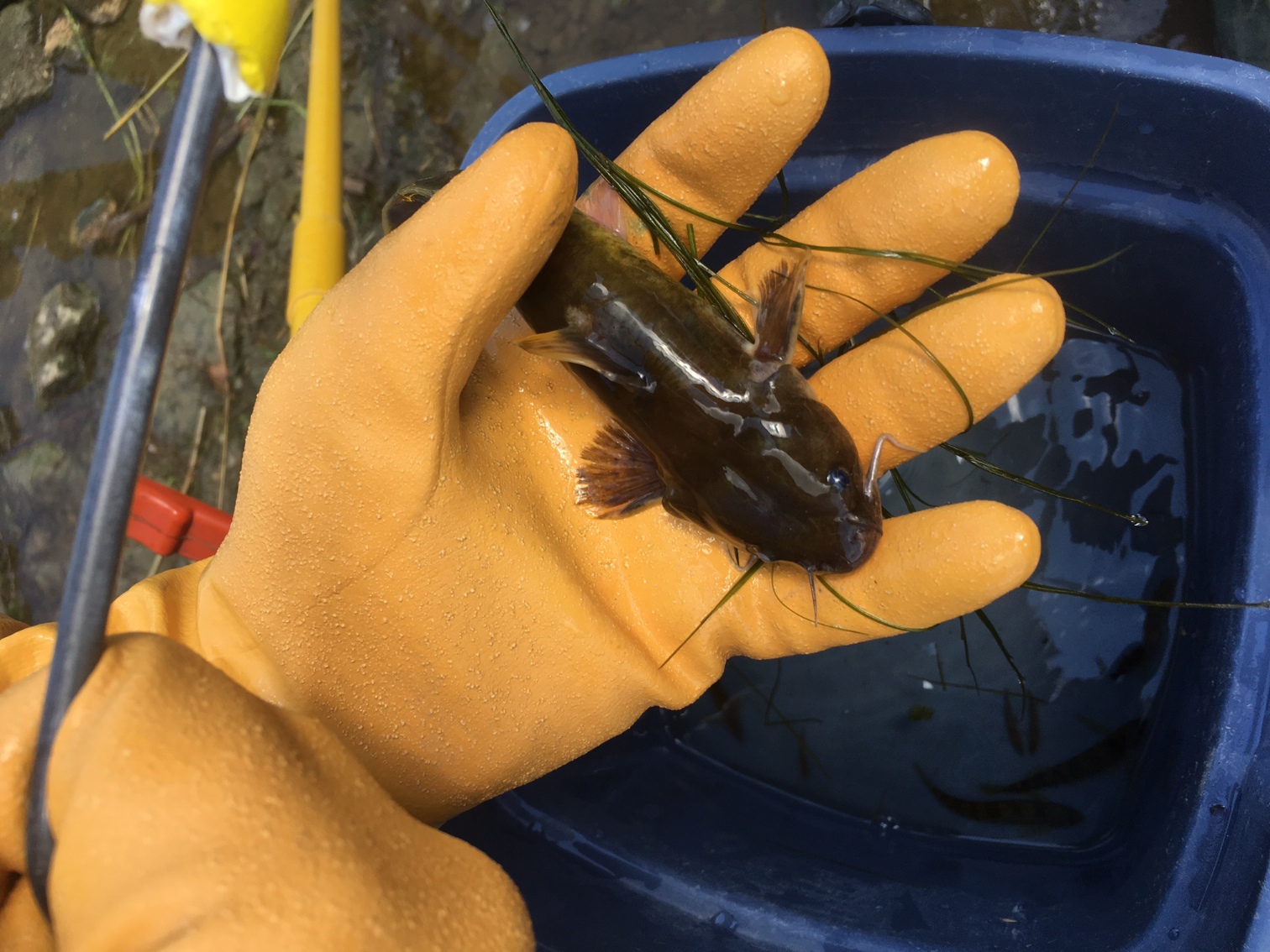
A little taste of what we found
I’ve been lucky enough to take part in two Bioblitz days in the last couple of months, organized through rare Charitable Research Reserve. My daughter works there so I guess you could say she dragged me into it, but that would be far from the truth.
Set me loose in the woods, fields and streams and let me learn about nature- I’m in!
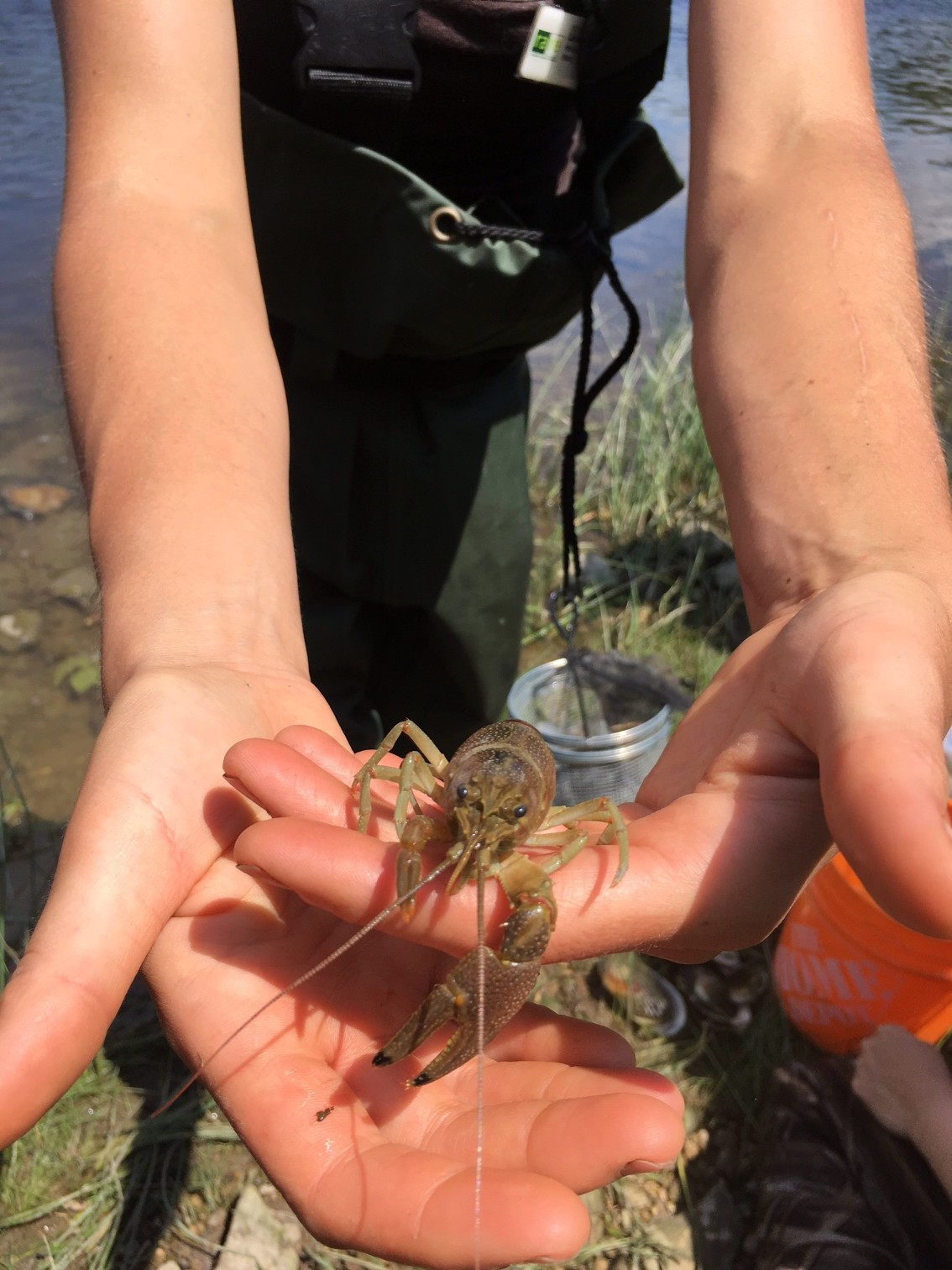
Another river dweller
The first Bioblitz was right at rare Charitable Research Reserve itself, in Cambridge, Ontario. We had a beautiful summer morning to plunge into the river with our hip waders and nets and see what we could find.
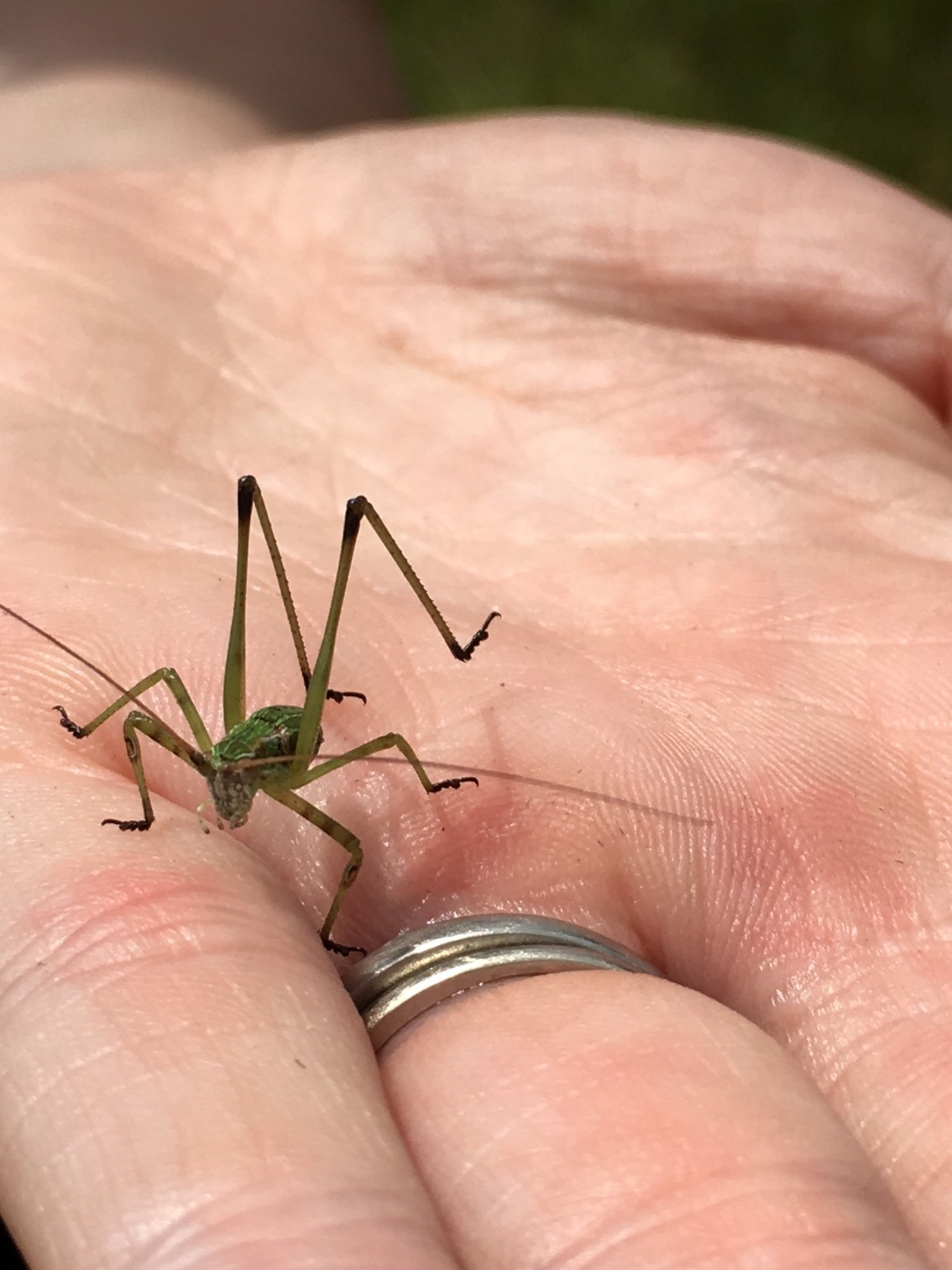
And then the tiny things…
My next quest of the day was a to go looking for insects, and the day had warmed up enough that we had no trouble finding a huge variety of insects and arachnids in my group, and swamping our expert with questions and requests for identification.
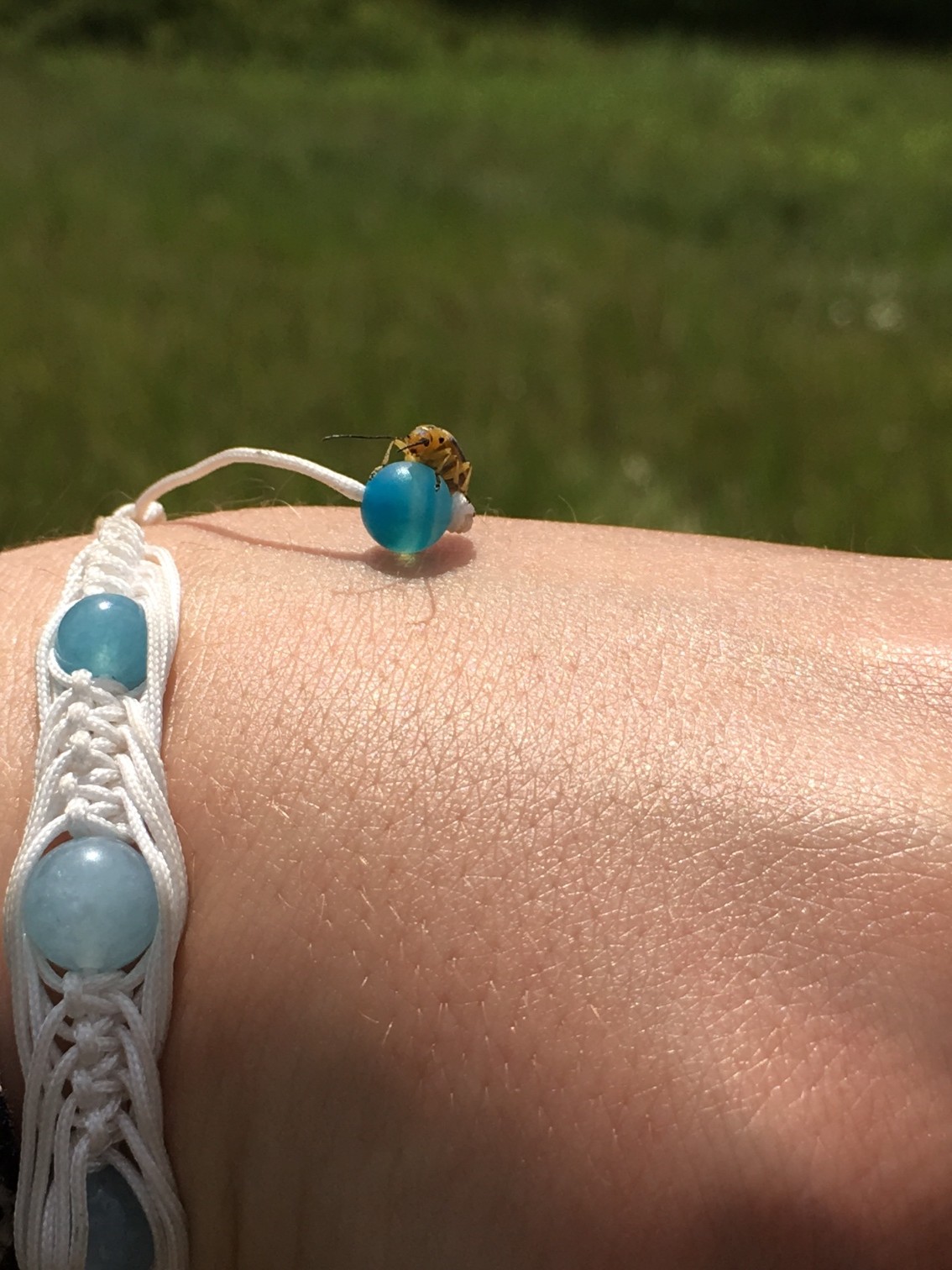
Fun with the smallest of the small
It was so fun to see kids and families getting all excited about nature and enjoying a day out. Not only kids are curious- everyone there was eager to learn.
The Cambridge area is a busy, developing part of Ontario and it is so important to preserve and keep track of the species that live there. I know that species are monitored all year round on the reserve, but the Bioblitz gives a snapshot of a day, and with so many people looking, and finding, it is exciting to be able to add a few more species to their site list every year.
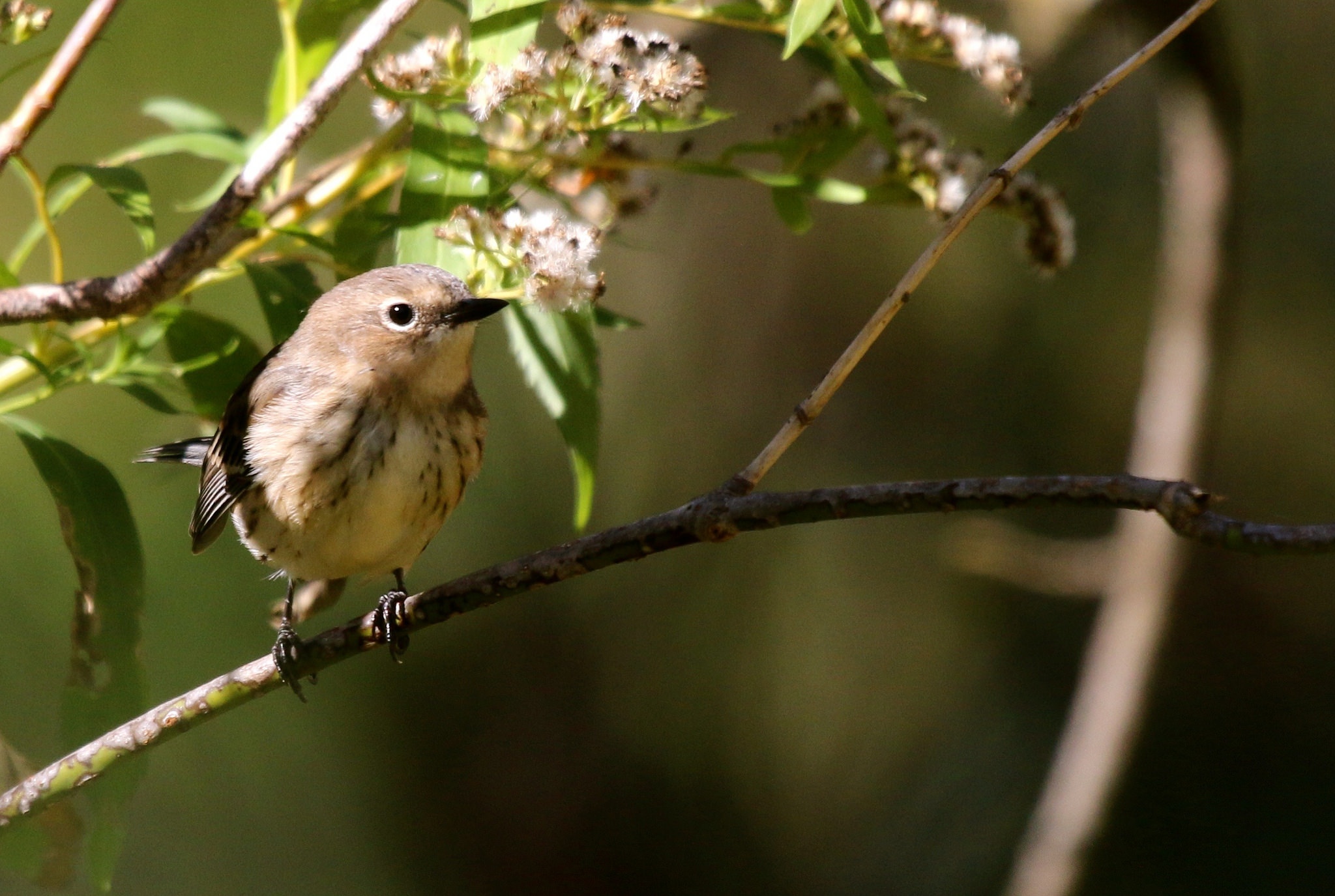
Yellow rumped warbler
My second Bioblitz was October 1 in Norval, the outdoor education centre for Upper Canada College. It is a beautiful property in Georgetown, but once again right on the edge of a heavily populated area. Planes from Pearson International airport flying overhead were a common sight throughout my day there.
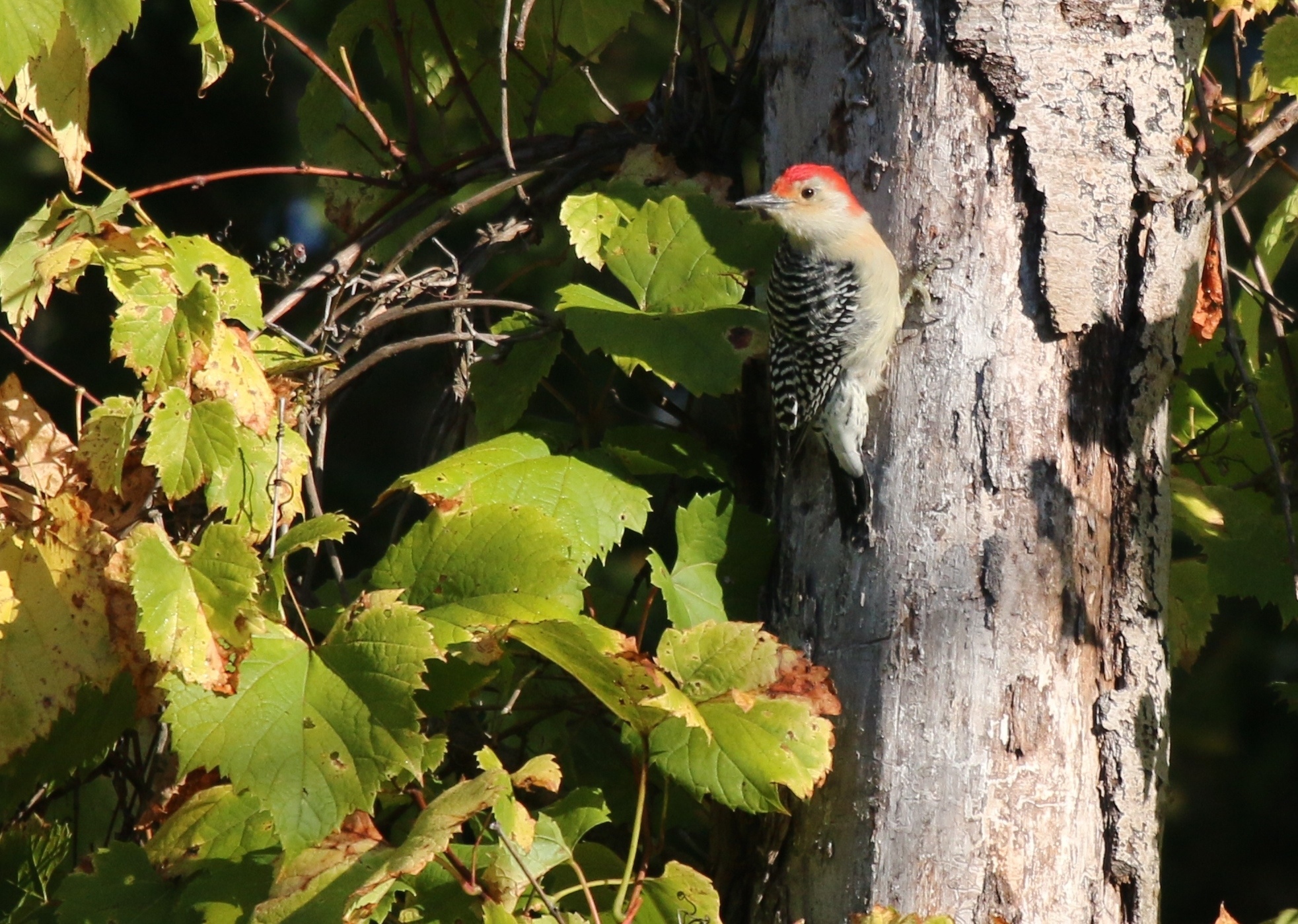
Red bellied woodpecker
My purpose for going to the Norval bioblitz was a little bit different. Rather than go out in a group and find a variety of creatures, I was tasked with finding birds.
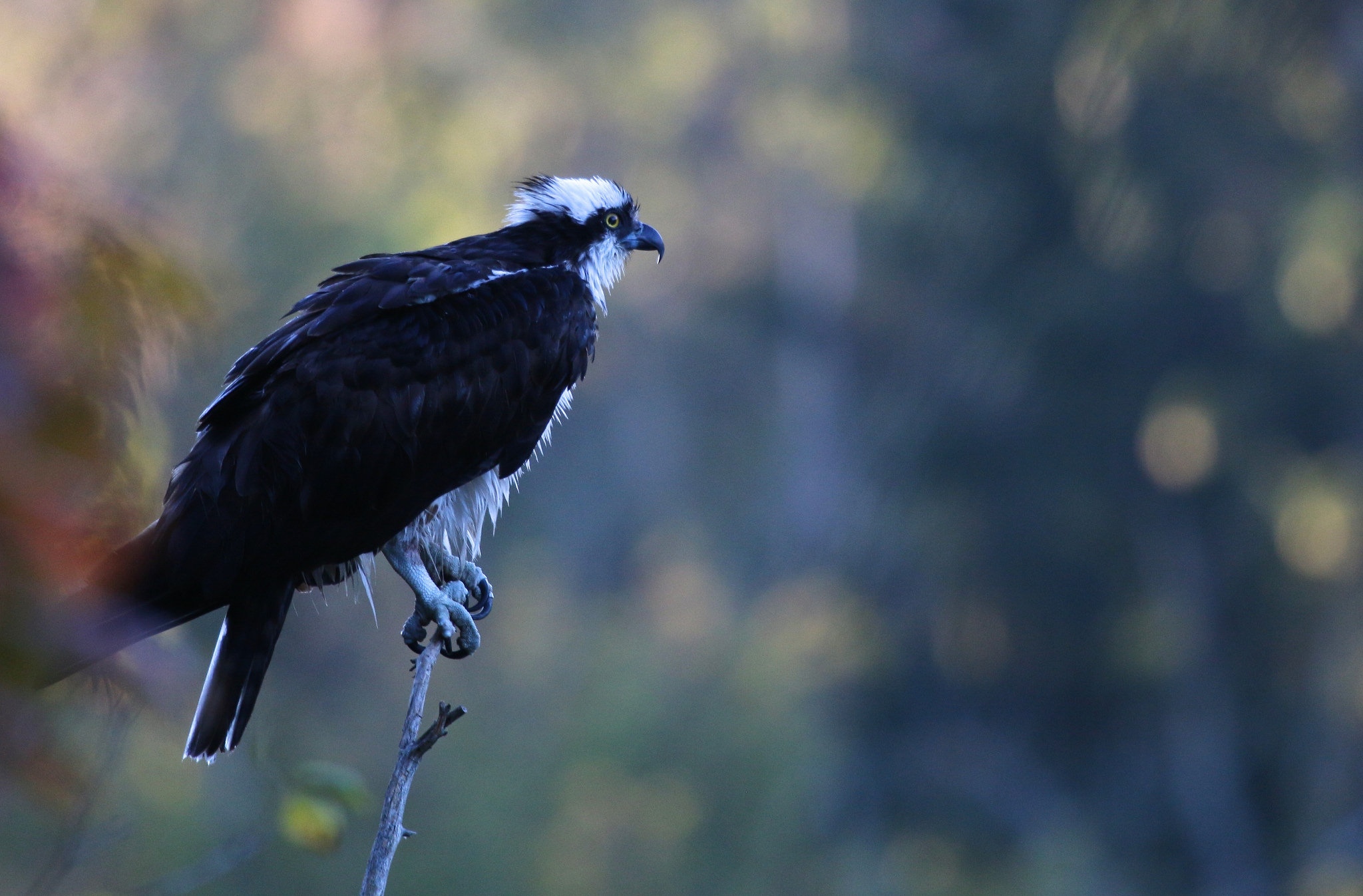
Early morning Osprey
I got up early in the morning and headed down to Norval so I could bird on my own before the crowd of people came. I was rewarded with a beautiful view of an Osprey by the river as the sun was rising. Moments later a deer crossed my path. Chipmunks were everywhere! But back to the birds.
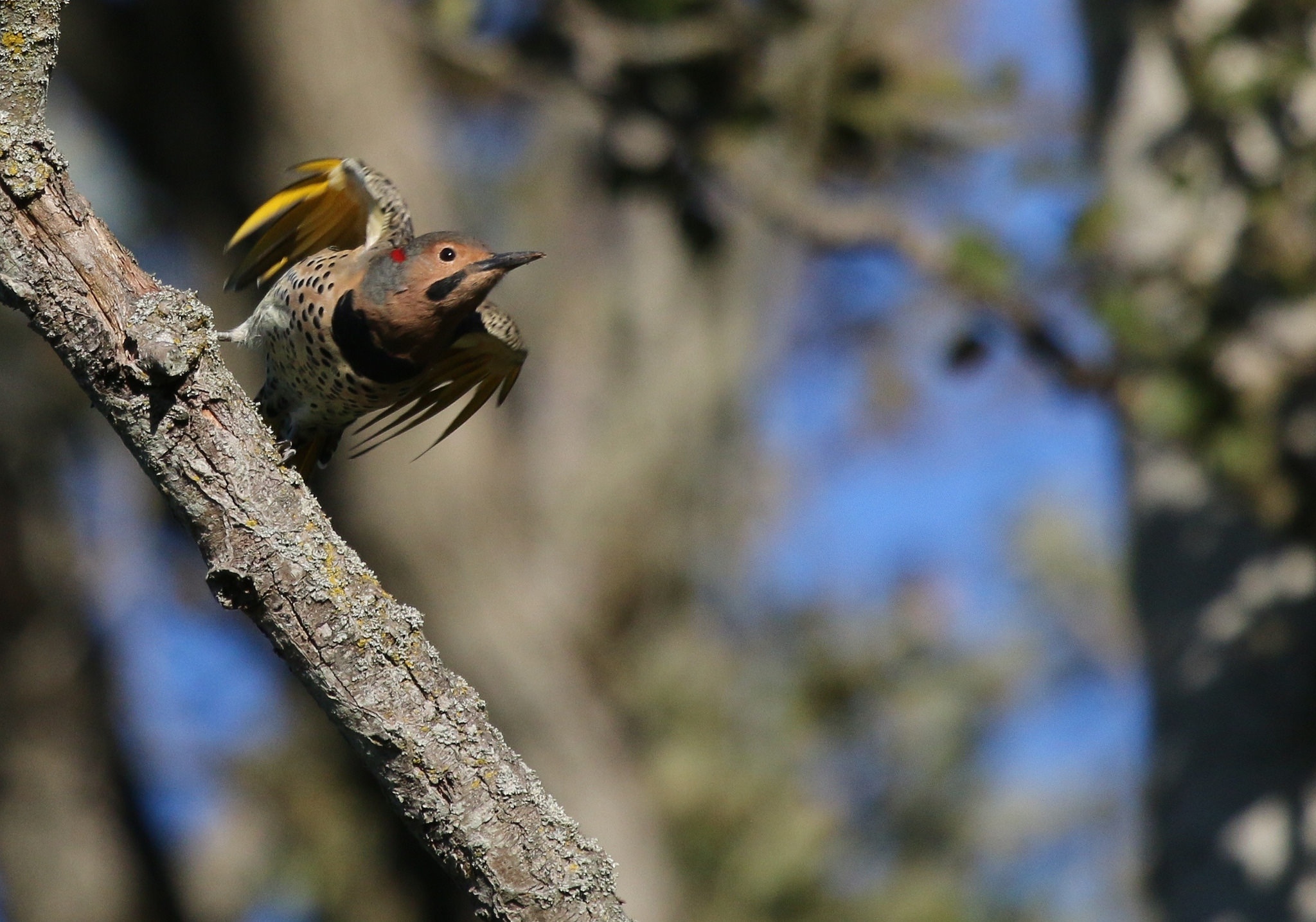
Flicker
Norval had a wide variety of woodpeckers, as well as migrating birds passing through.
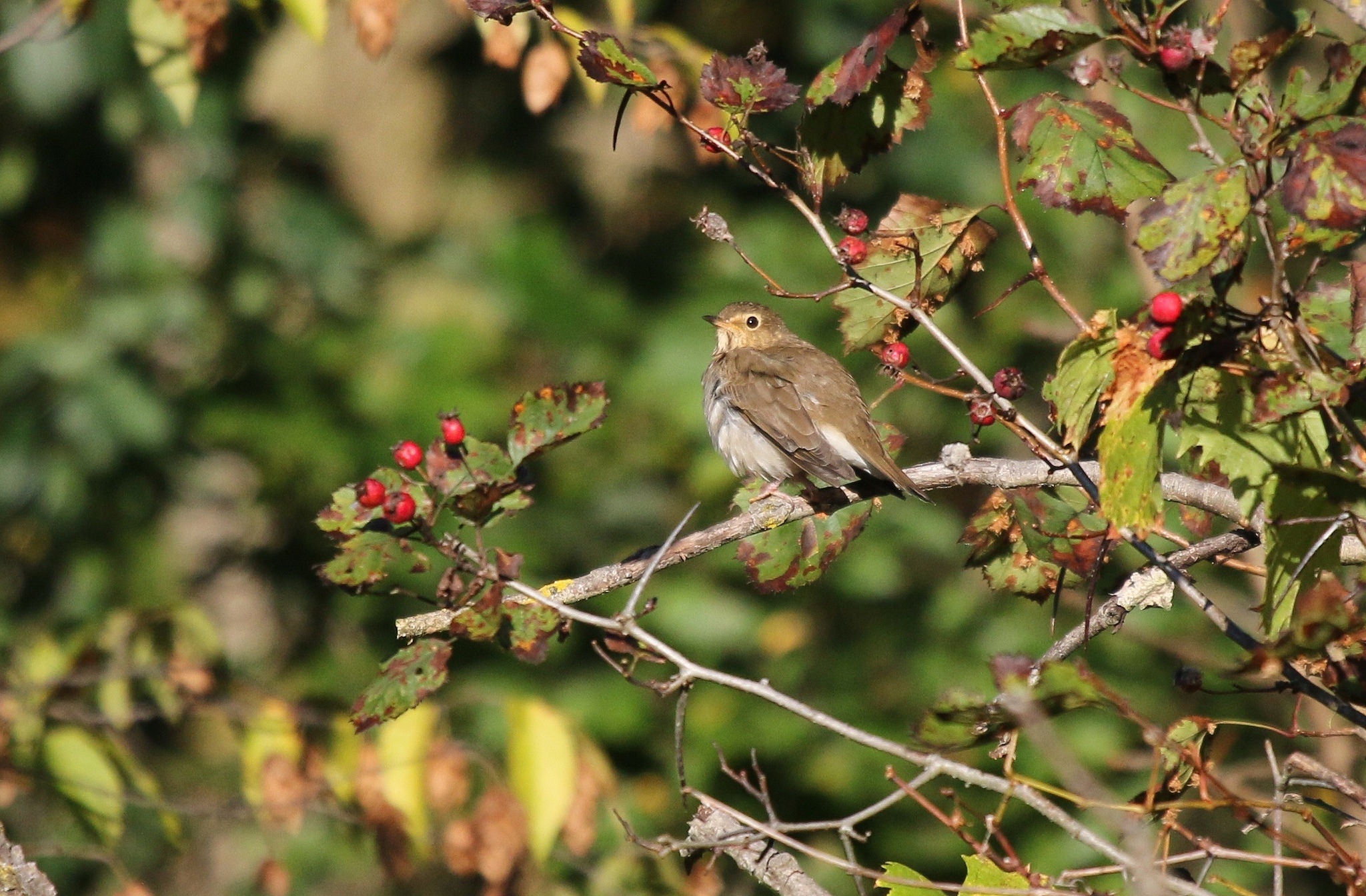
Swainson’s Thrush
I did see one bird I had never seen before, a type of thrush that does move through my area of Ontario but is not very obvious due to its habits and colour. In birding this is called a “lifer!”
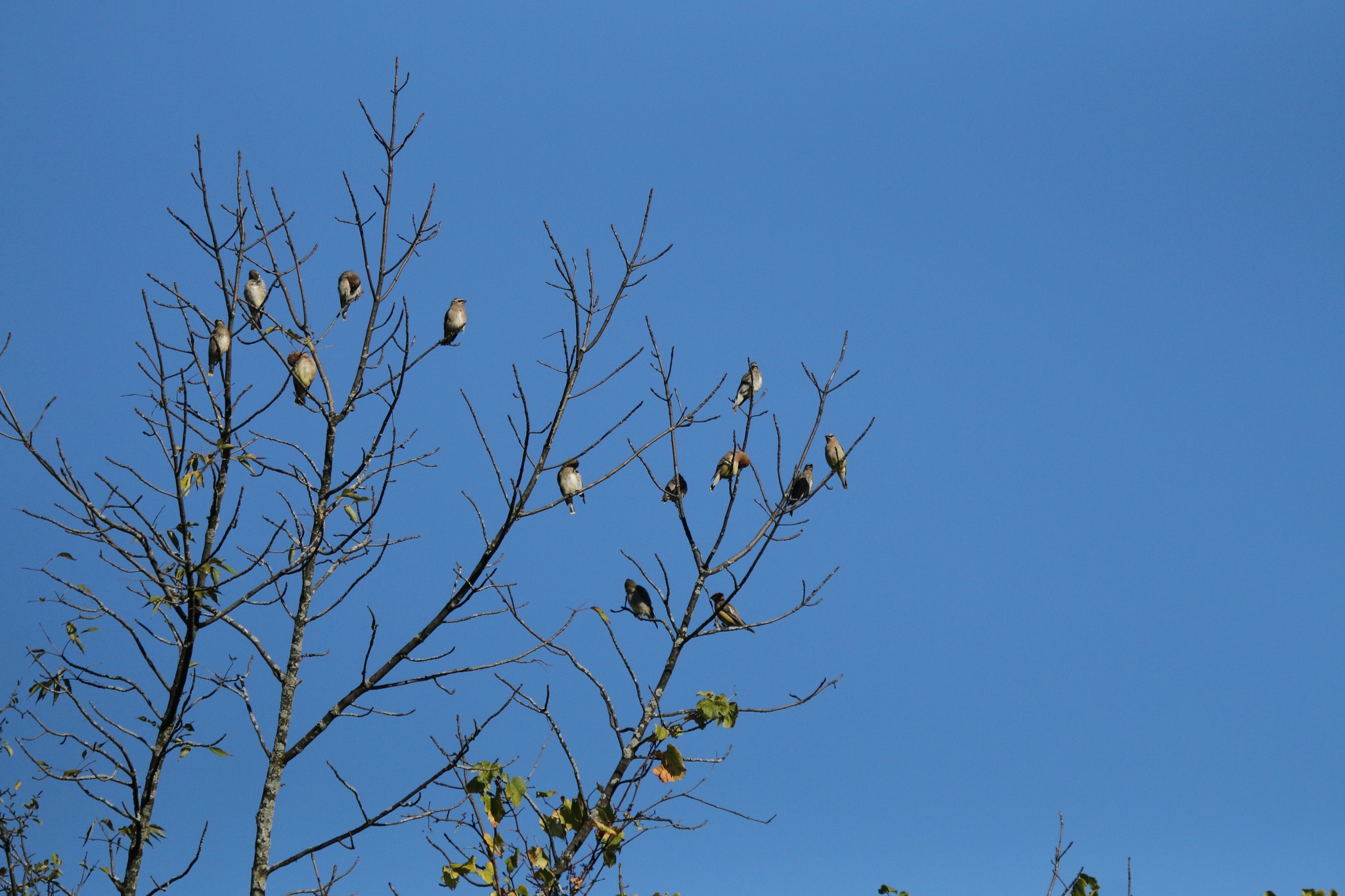
Cedar waxwings
Birding in the fall can be fun, as many trees and shrubs are fruiting and it is possible to come across large flocks feeding such as these Cedar Waxings.
Overall I found 35 species of birds at Norval and was happy to hear that other people there found some different birds than I did to add to the Norval list- one person even saw a Bald Eagle circling overhead, and I know that pre-dawn listeners were treated to the calls of a Great Horned Owl and a Screech Owl.
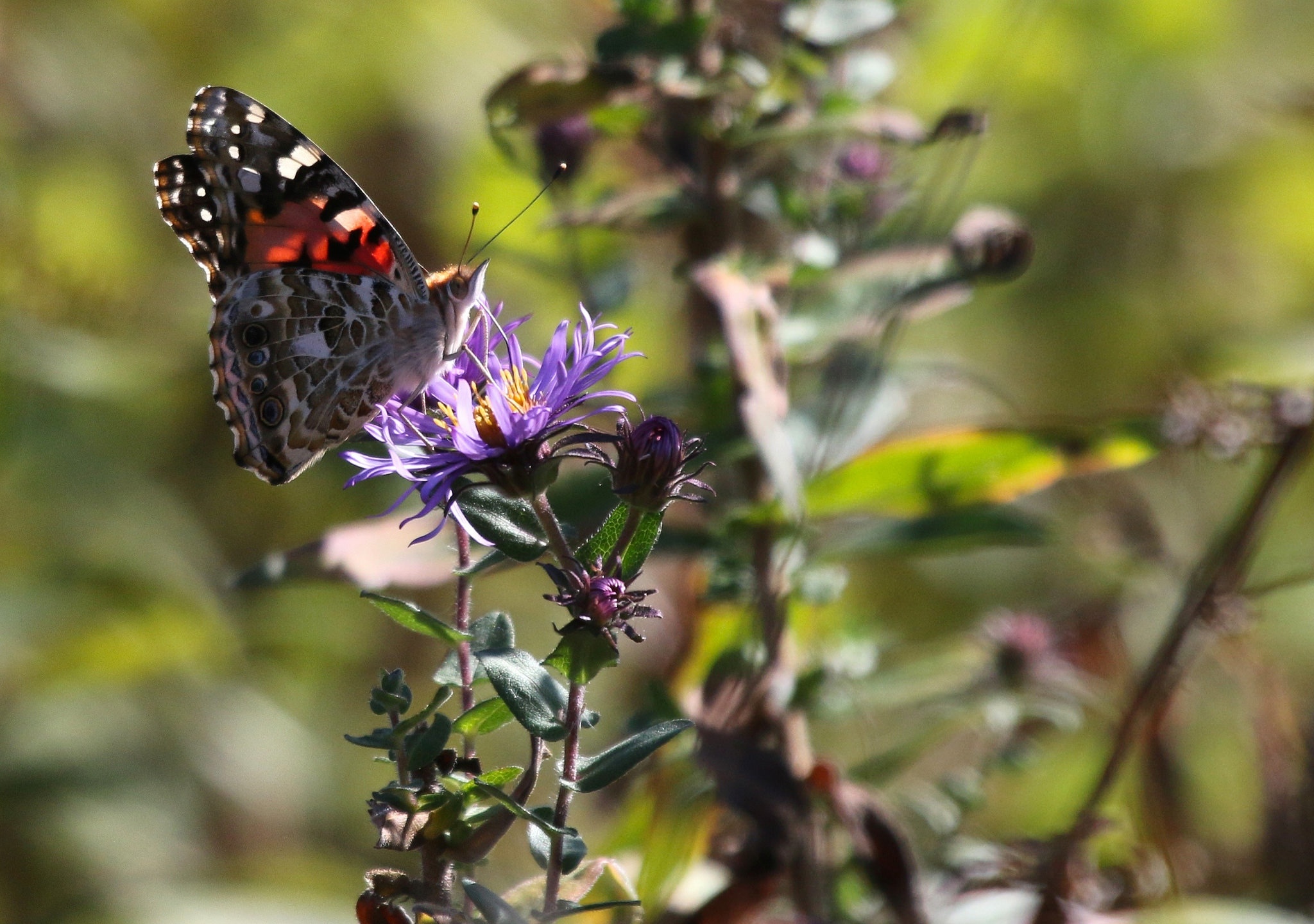
Painted lady
Knowing me, my daughter was a little bit concerned that I would get lost wandering around in an unfamiliar place by myself, and admittedly I did get a bit off track a couple of times. However, one detour took me through a field full of painted lady butterflies- an absolutely magical sight.
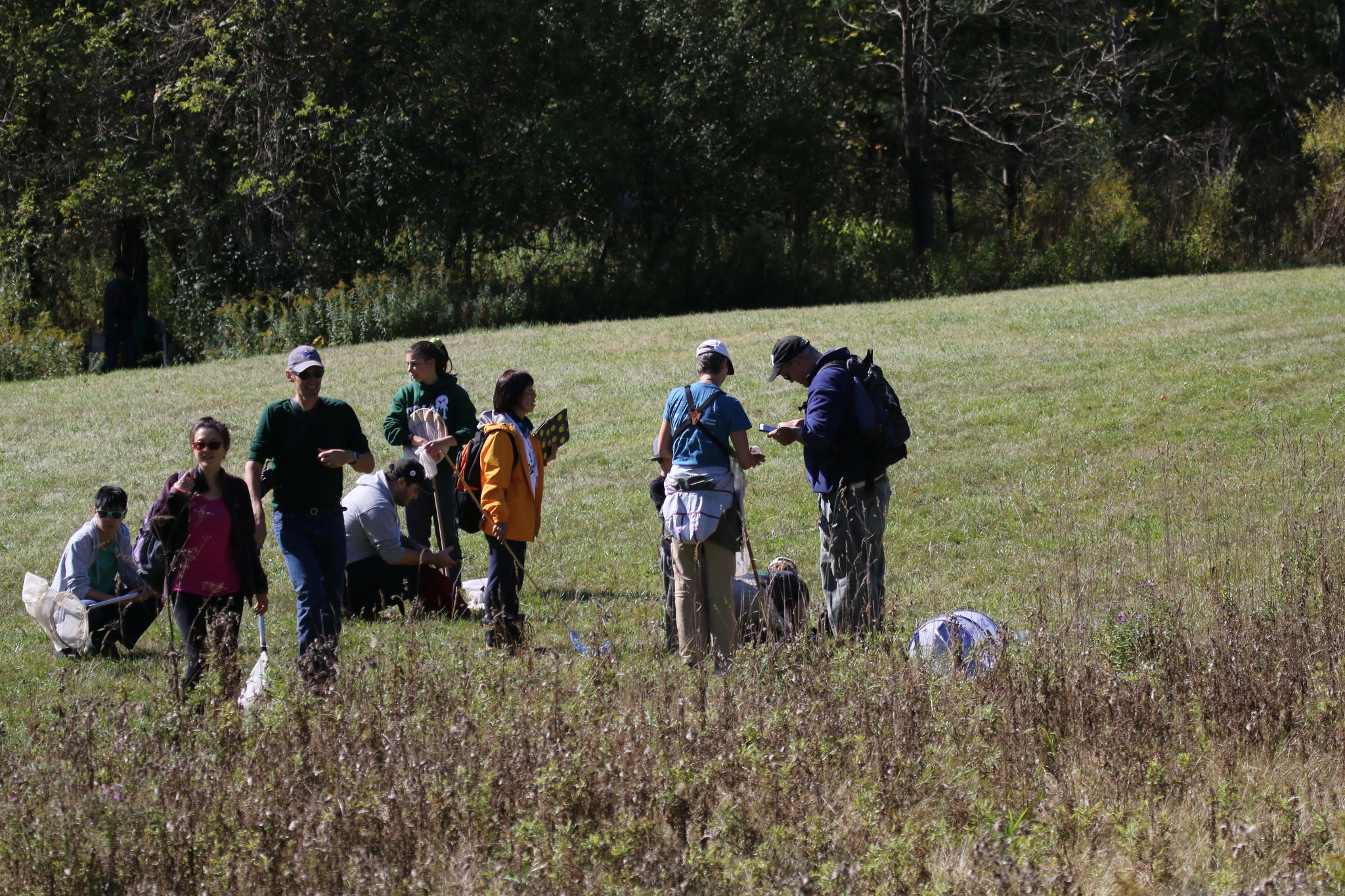
Insect hunters
As the day warmed up, groups of people headed out to look for insects, and try their luck in the river.
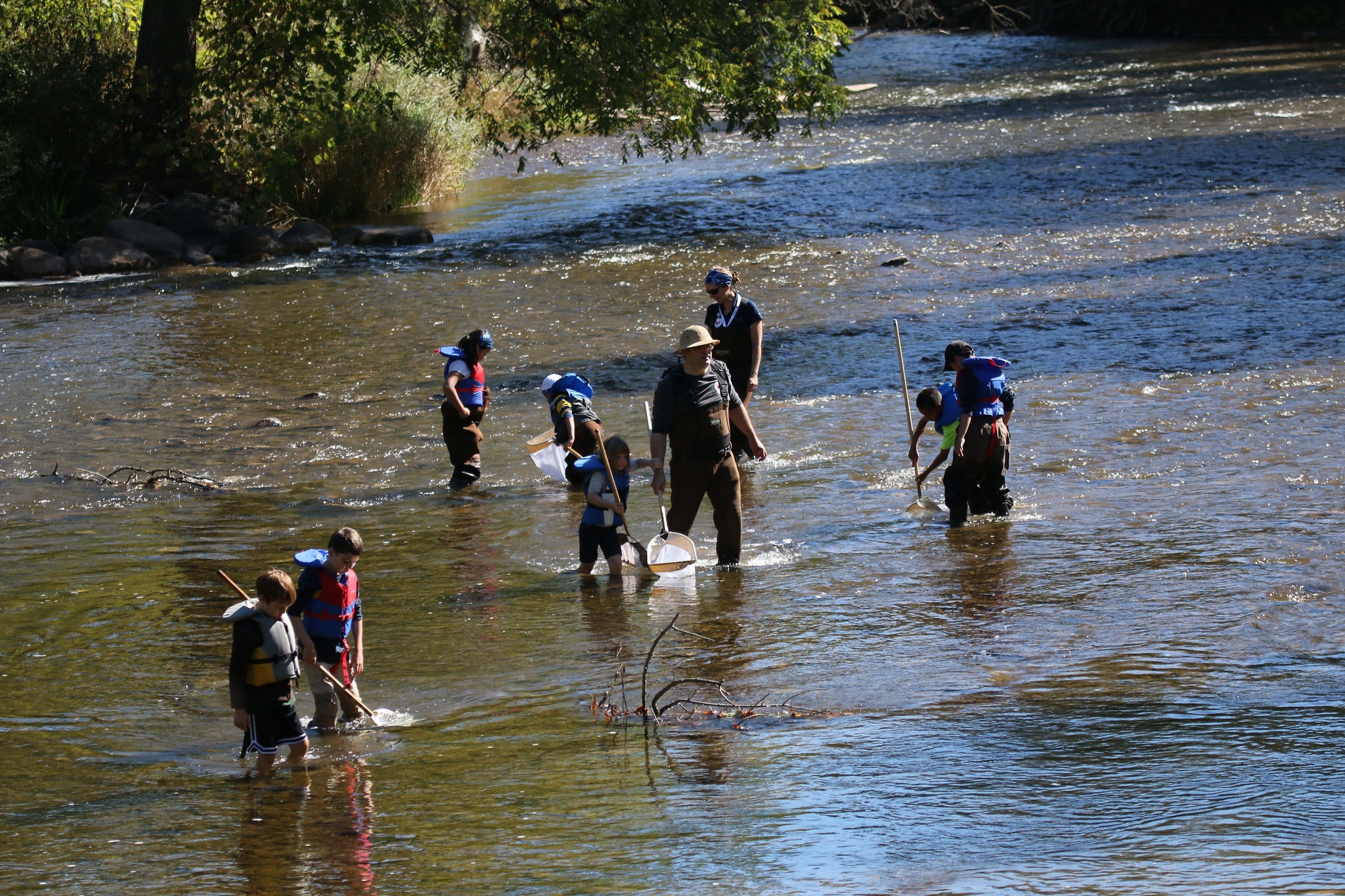
October fishing in the Credit River
As part of the Canada 150 celebrations, numerous Bioblitz events took place all across Canada this year, sponsored by the Canadian Wildlife Federation.
http://bioblitzcanada.ca/events_calendar.aspx
One result will be a “snapshot in time” inventory of Canadian species in significant natural areas.
But perhaps an even more important result will be the curiosity and connection to nature that was ignited in the citizen scientists, young and old, who took part in the community Bioblitz events across the country.
To learn more about rare Charitable Research Reserve and the work that they do: http://raresites.org
Thanks for visiting, and if you ever get a chance to participate in a Bioblitz, give it a try. You will learn so much!
Leslie
The post Bioblitz! appeared first on Leslie Abram Photography.
]]>The post Baby Birds, Berries, and Bug Buffet appeared first on Leslie Abram Photography.
]]>These photos were all taken on my property, or just across the street in the field.
You may have noticed a lot of birds passing through lately. Believe it or not, birds are already beginning their southward movement. That takes a lot of energy, which means eating as much as they can right now!

We share our blueberries with the robins.
There are also a lot of baby birds around- birds that have grown up in our area and are now fattening up for their first journey south. Let me introduce you to some of the visitors to our garden.
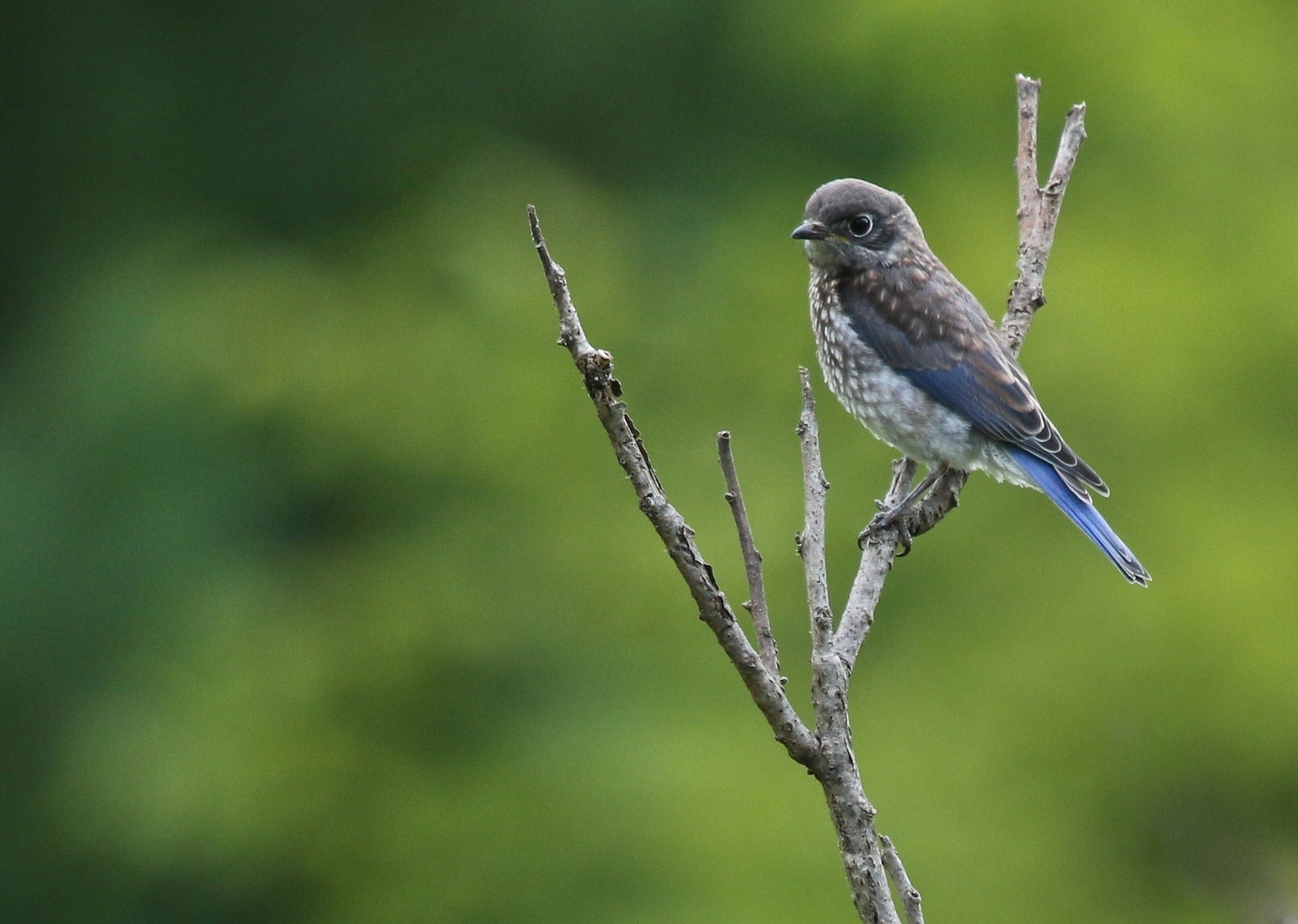
Unbelievably cute baby Eastern Bluebird
Although the bluebird boxes on our property did not end up housing any little families of bluebirds, our neighbour’s boxes did, and now the little bluebirds visit our yard for a snack, flitting down from the branches to catch insects, then back up again.

Great Crested Flycatcher
We welcome the families of flycatchers as well, who nested in a hole in a tree near our house.

Blue winged warbler
Local birders know that if they want a guaranteed sighting of a Blue Winged Warbler, they need only visit my neighbourhood in the summer. Right now, the families are stocking up on food for their journey south.

Cedar Waxwing
Our blueberry patch is definitely a hit. Especially with the Cedar Waxwings Luckily once our elderberries fruit, the waxwings much prefer those berries.

Feed me! Baby Catbird
The young catbirds flap their wings and literally “meow” for their food.

Baby Eastern Phoebe (I think)
I’m pretty sure this is one of the baby phoebes who grew up under the awning on our neighbour’s porch. It likes to sit in the dogwood bushes in my garden and fly down to catch flying insects.

Juvenile Robin
I think the robins under our back deck must have raised 3 families this summer!

Young red Bellied Woodpecker
I’ve learned a lot too. For example, I had no idea that woodpeckers ate berries until this year- photo evidence!

Everyone loves the blueberries.
I also never knew that chipmunks do this. It waits on the ground for the birds to drop the berries, even though I know it is perfectly capable of climbing up into the bush.
If you want to go out and take a look to see what you will find in your neighbourhood, most bird and critter activity is early in the morning, say around 7 – 9 am. Not too too early these days, as the mornings are darker, and chilly.
Stay tuned for my next couple of blogs- “Pollinators” will be next, and then I will have to do something with the hundreds of praying mantis pictures I have taken of my baby mantises growing up in my garden.
Thanks for visiting!
The post Baby Birds, Berries, and Bug Buffet appeared first on Leslie Abram Photography.
]]>The post Praying Mantis Nymphs appeared first on Leslie Abram Photography.
]]>
A few weeks back I was at the garden centre and saw that they were selling praying mantis egg cases! Praying mantises eat a lot of insects that can harm our flower and vegetable gardens, so the cases of eggs holding these little killers were for sale for the price of $15.00 to help control garden pests (plus they are really cute). Of course I bought one.

The egg case is made by the female in the fall, and starts out as a foam like substance that she deposits on a plant stem, such as goldenrod. When this foam dries, it provides a case in which the eggs can over winter. The case had been put in a mesh bag which I tied to a bush about 5 feet off the ground.

The next step was to sit back and wait. The instructions said it would take one to eight weeks for the nymphs to emerge. What? Well, I tried to check every day, but really that is quite the range of time! Anyway, a couple of days ago I went to check the egg case and it was surrounded by tiny praying mantises! I saw 2 inside the bag, and the rest were hiding in the leaves of the pagoda dogwood I had tied the case to.

I had about an hour to watch these little critters-they were really well camouflaged, and they could run very fast. They dispersed quickly. When disturbed, they would drop to the ground.

Some of the praying mantis nymphs that hatched earlier were a bit bigger, and were waiting very still for the new babies to come out. This was not a welcoming party. They ate each other. No photos turned out of this, but here is one waiting. This cannibalism is not isolated to the nymphs. Did you know that the female praying mantis sometimes eats the male after, or even during, mating? Yum.

It’s a tough world out there. I got a close up view of a damselfly making a meal of one of my babies.

Look out, little one! Praying mantises are unique in the insect world as they can turn their heads 180 degrees. Try to sneak up on a praying mantis, and you may be startled when it looks over its shoulder at you. No other insect can do this. Praying mantids have a flexible joint between the head and prothorax that enables them to swivel their heads. This ability, along with their rather human faces and long, grasping forelegs, make them endearing in a creepy kind of way.

I don’t really know how many praying mantis nymphs emerged and ran off before I discovered it was their birthday, but I do know there have got to be some lurking out there in my garden. I hope I come across some of them as the summer and fall unfold.
A master gardener I met last week told me that he and his wife just go out in the fall and collect praying mantis egg cases on goldenrod stems, and bring the stems back to their garden. Now that I know what the egg cases look like and where to find them, I plan on doing this too. Who knows, maybe I will have many generations of praying mantises living and reproducing in my garden.
Thanks for visiting my blog!
PS: Still waiting on the baby Bluebirds and Tree Swallows.
The post Praying Mantis Nymphs appeared first on Leslie Abram Photography.
]]>The post Calendars to Benefit Fixed Fur Life Animal Rescue appeared first on Leslie Abram Photography.
]]>All proceeds go to the animal rescue group in our area called “Fixed Fur Life.” This group does wonderful work by saving unwanted and stray pets, spaying or neutering them, then finding them good homes. Amazingly, they have spayed and neutered over 20,000 cats and dogs in the Quinte region. This is a cause I am passionate about, and I hope to give Fixed Fur Life a huge donation this year.
Calendars are $15.00 each, or $20.00 if you would like them mailed to you.
For those of you in the local area, I will be holding a Photo Exhibition on Saturday, December 10 from 1:00-5:00 PM at the Studio Above the Grind, 45 Front Street, Trenton. Calendars and prints will be for sale there. Please let me know ahead of time what you would like, as calendars always sell out fast.
Contact me at [email protected] before December 10, and I will set calendars aside for you, or get them mailed out to you.
Here’s a preview of the 2 calendars I am offering for preorder. Enjoy!
Calendar 1: The Magic of Water and Ice
For this calendar I tried to look at nature in a different way, exploring the fascinating properties of water and ice.

Cold out? Blow a bubble and watch it freeze!
January

Ice Claws on Lake Ontario
February
Long Tailed Duck at Freeze Up
March

Refraction
April
Prince of Flowers
May
Sun Drops
June

Wild Things
July

Oil and Water
August
Lily Worlds
September

First Frost
October
Frozen Gems
November

Ice Forest
December
Calendar 2: Ontario Wildlife
A year in the wild, Eastern Ontario.

Snowy Owl
January

Evening Grosbeak
February

American Robin
March

Gray Tree Frog
April

Baltimore Oriole
May

Bee on Coneflower
June

Piping Plover Chick
July
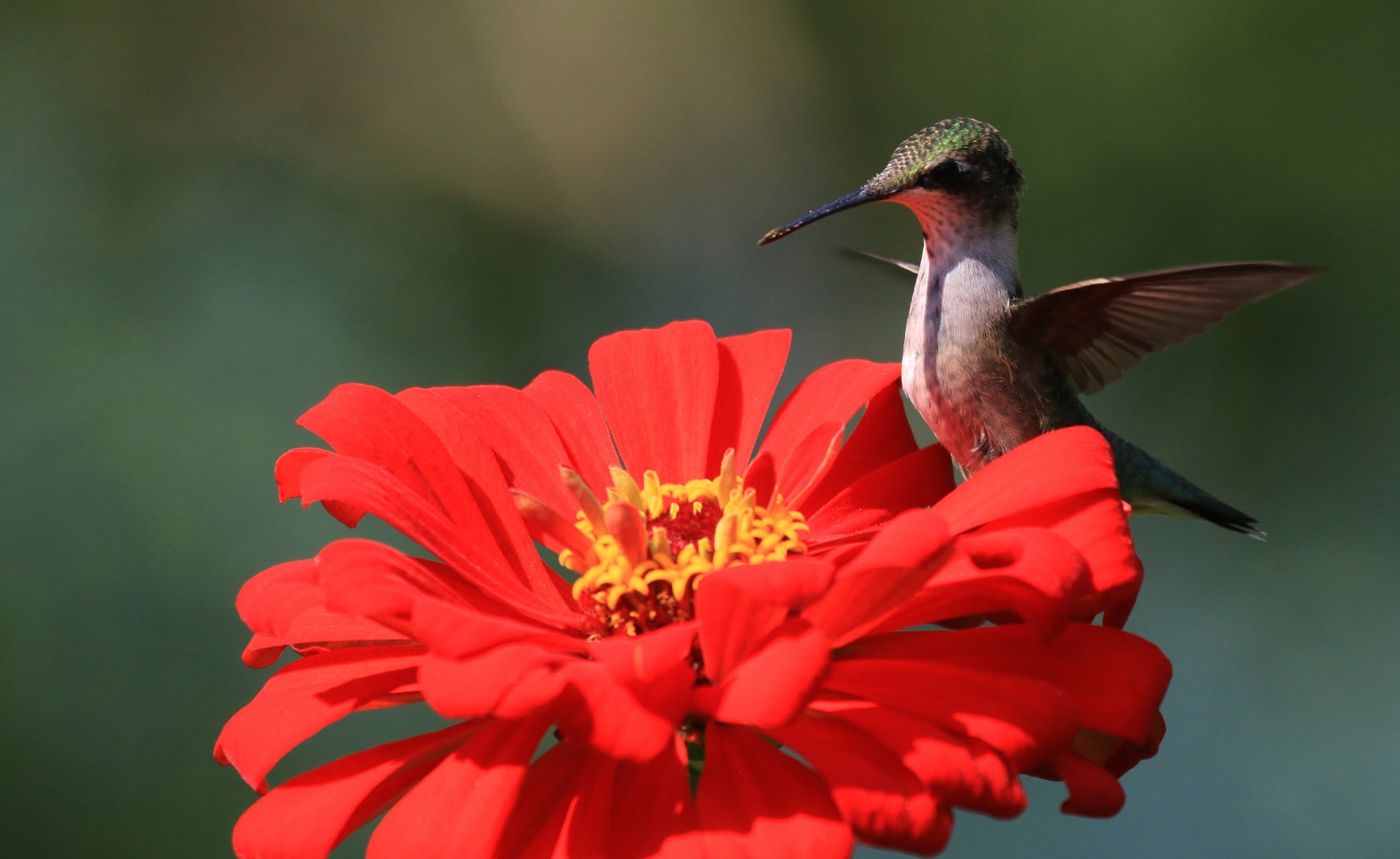
Ruby Throated Hummingbird
August

Giant Swallowtail
September
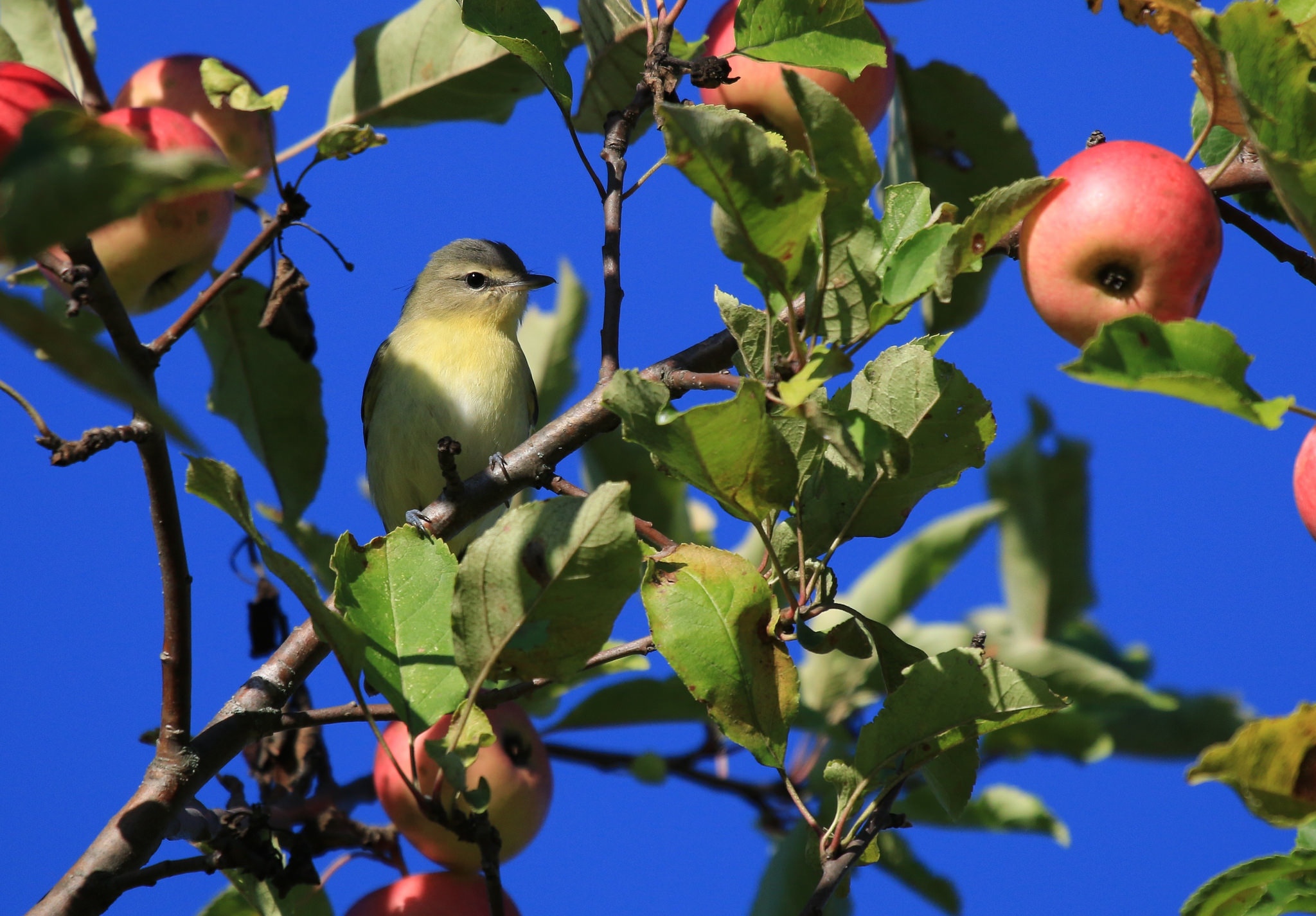
Philadelphia Vireo
October

Barred Owlet
November

Snowy Owl
December
Thanks for taking a look! Please email me to order: [email protected]
The post Calendars to Benefit Fixed Fur Life Animal Rescue appeared first on Leslie Abram Photography.
]]>The post The Joys of Gardening for Wildlife appeared first on Leslie Abram Photography.
]]>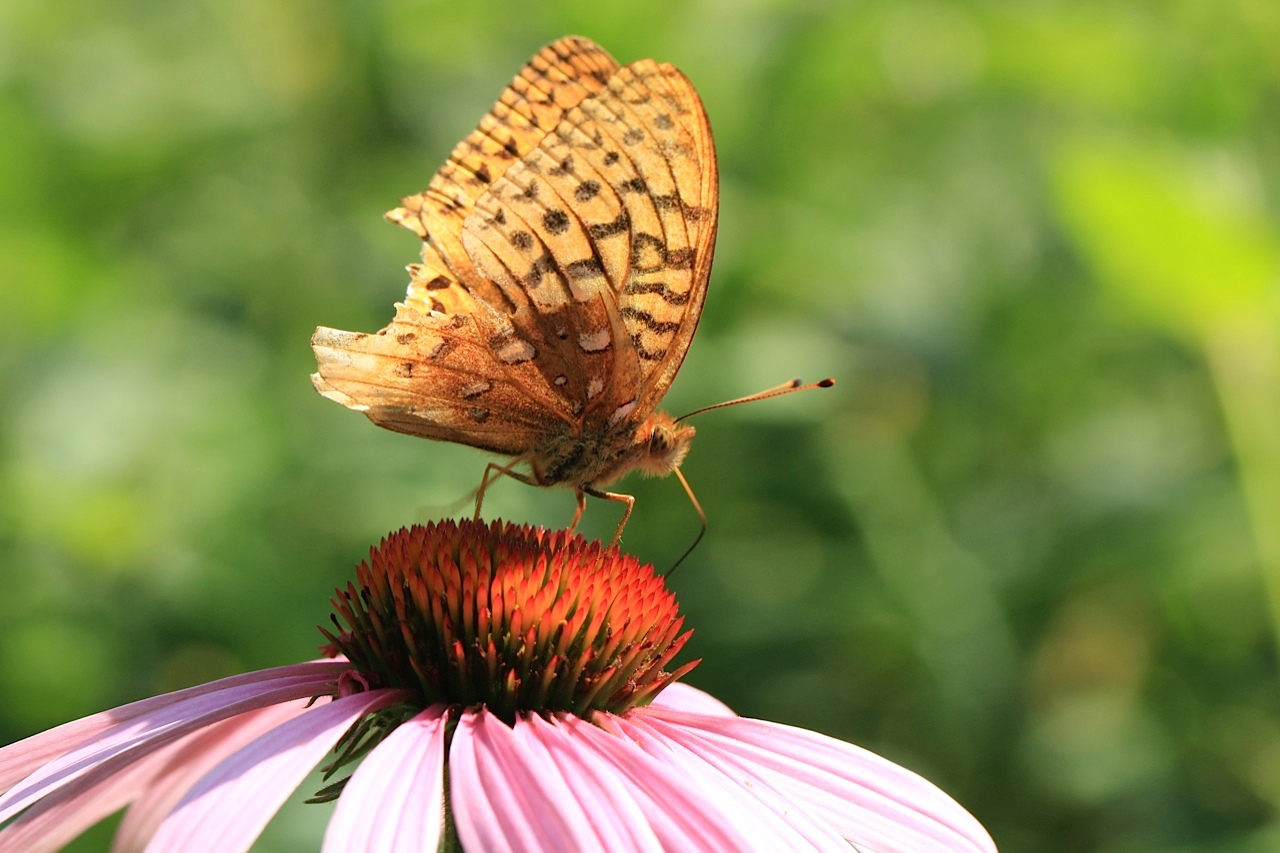
Red bee balm is one of the stars of the summer wildlife garden
That’s on purpose. Gardening for wildlife is so much fun. Pick some native flowers, shrubs, and trees. Add in some your favourite flowers that have lots of pollen and nectar, and enjoy the show.
Plant coneflowers and black eyed susans for their seed, and bee balm for its pollen and nectar
Even though we had the worst drought in years this summer, my garden is going strong. Native plants are tough, even if they can’t get watered regularly. When I first thought of making my garden, I planned it to attract hummingbirds and butterflies. It does! But I have discovered a whole lot more about all the different creatures who benefit from having a wild garden like I have created.

Jewelweed and loosestrife by the creek
We’ve allowed the edges of our property to go wild, and stopped cutting grass down by the creek. This time of year the wildflowers are covered in pollinators, and the seeds from the weeds are being devoured by birds.
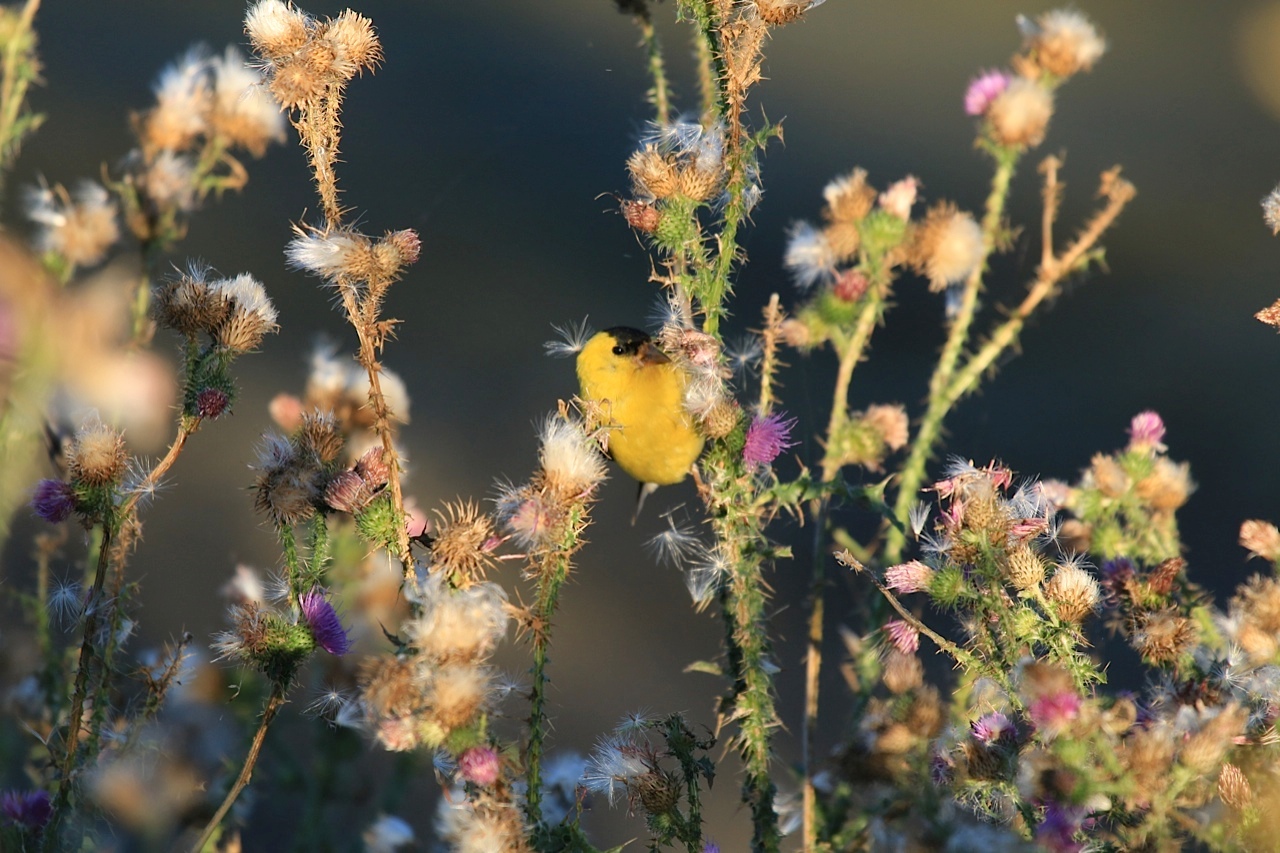
American Goldfinches use thistle seeds for their nests, and they eat them too.
I love watching the American Goldfinches flying all over our property this time of year.
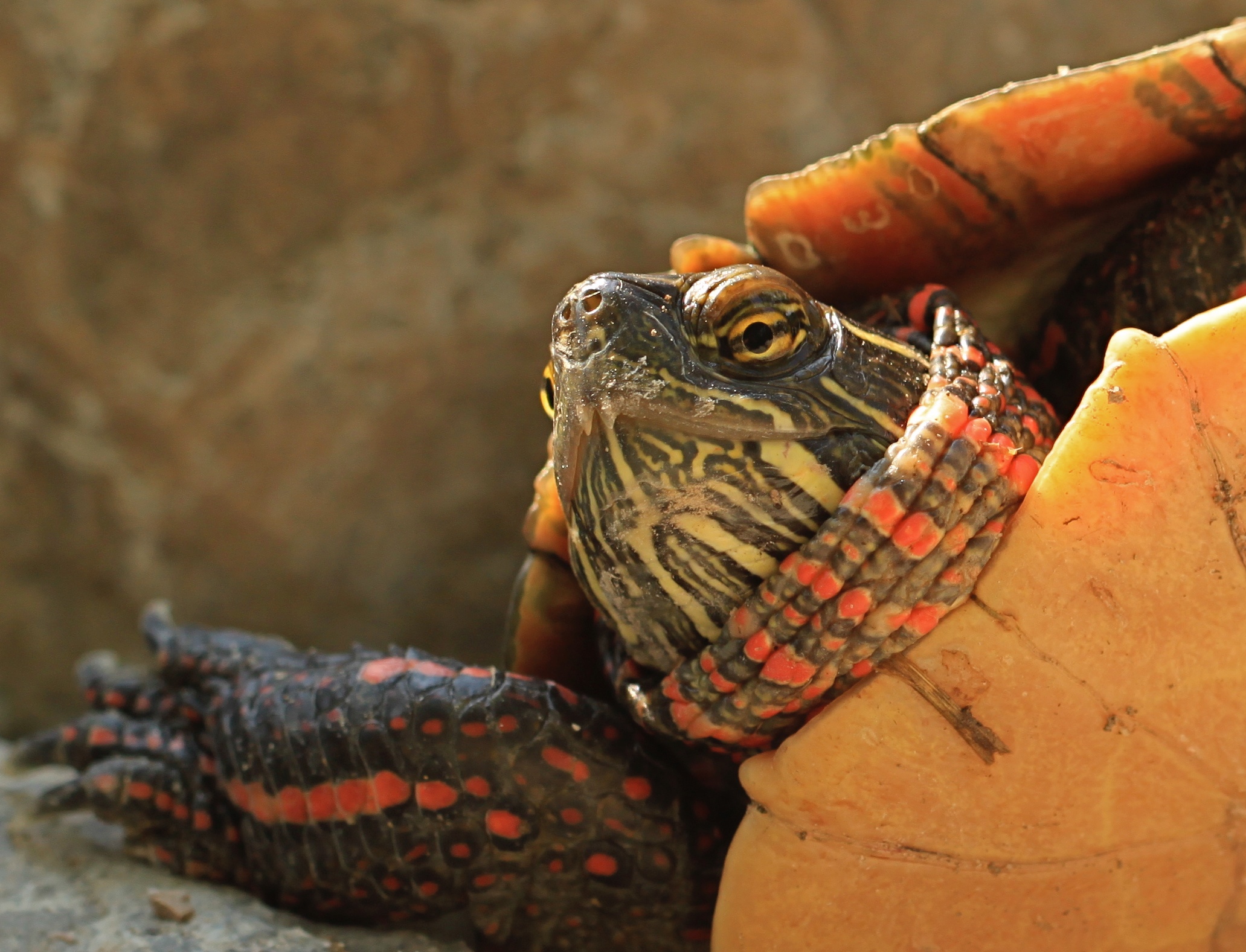
lounging painted turtle
Turtles love the rocks and long grass. I love their exquisite patterns.
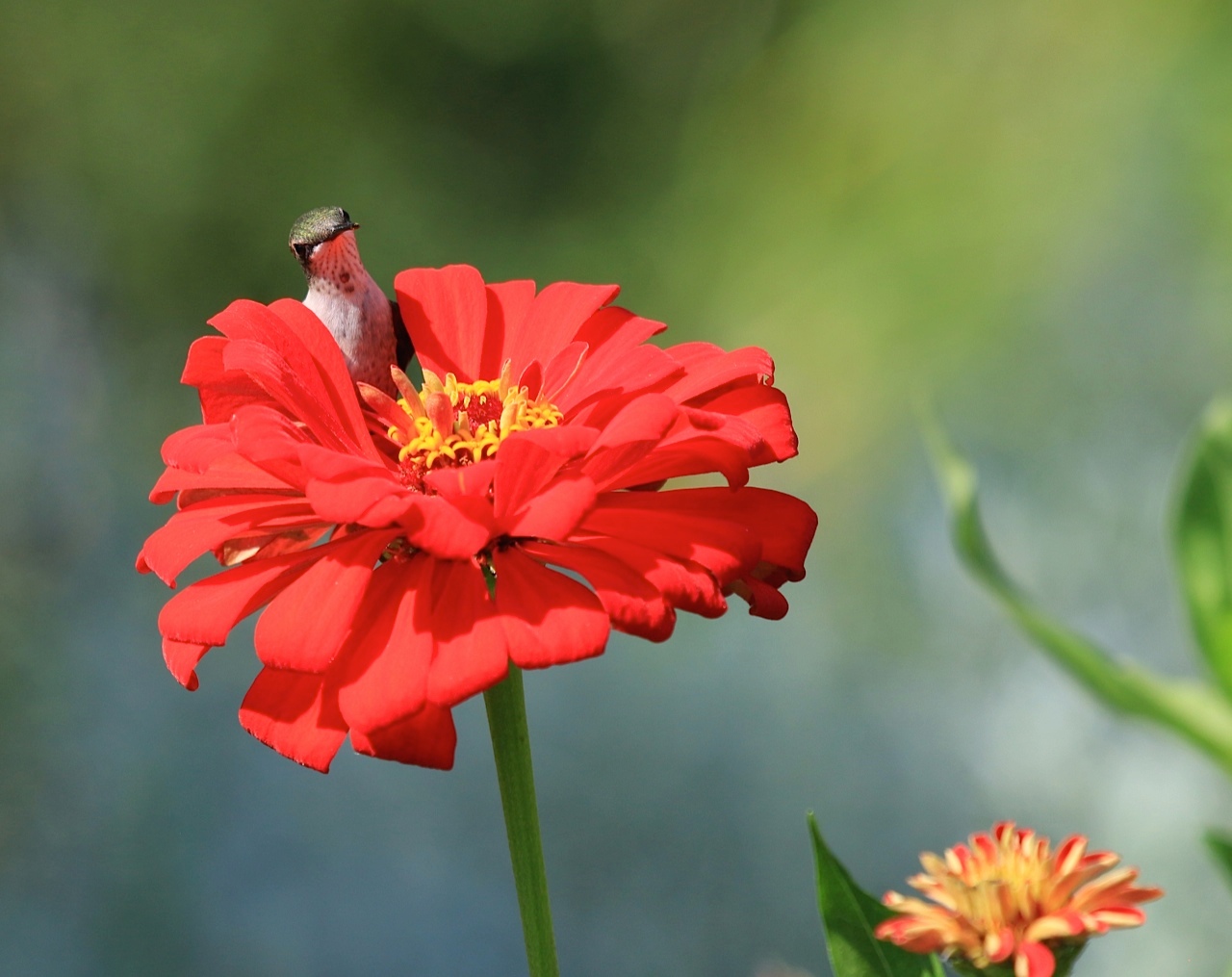
Prince Hummingbird on his zinnia throne
Hummingbirds are the bosses of my wildlife garden. They love the zinnias I have planted.
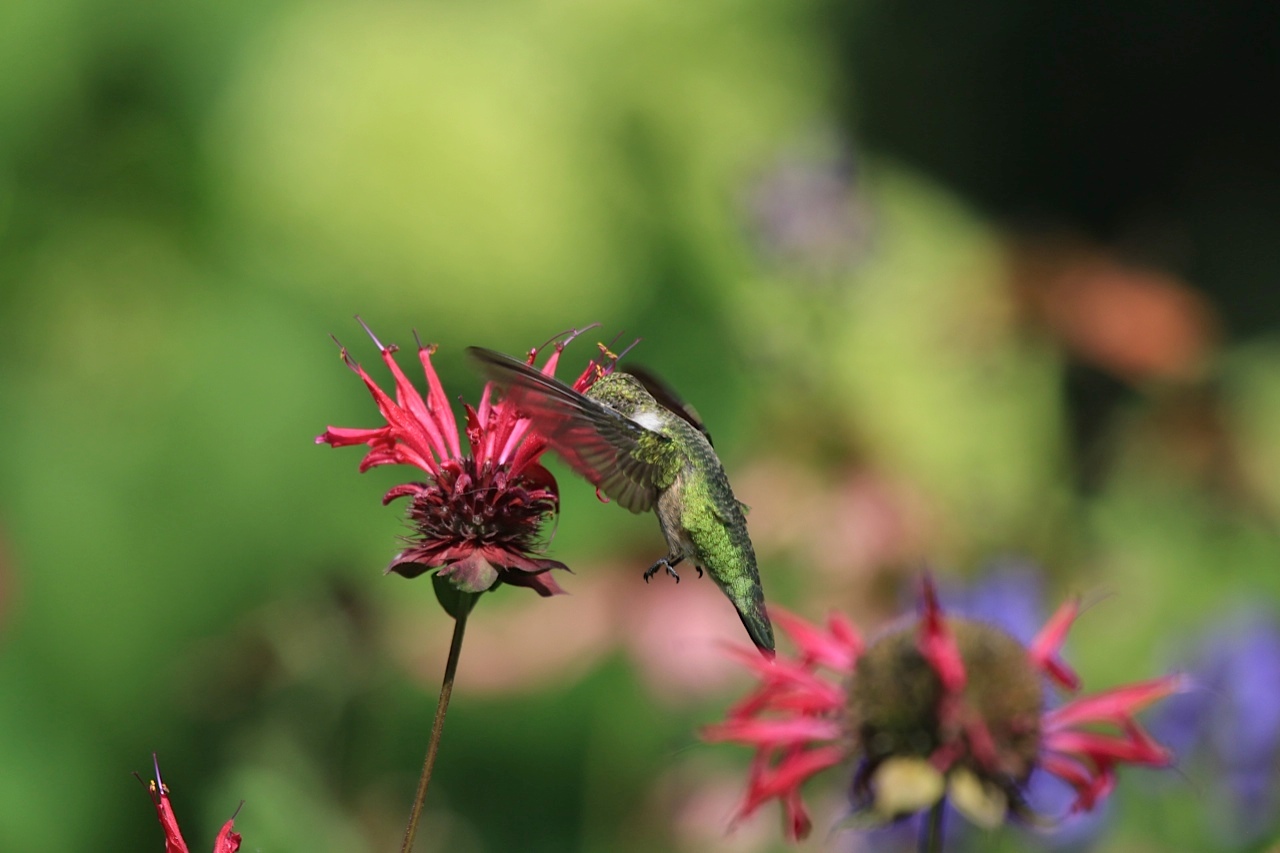
Hummingbird zoning in on some bee balm
Zinnias aside, their absolute favourite flower is bee balm (monarda) which blooms steadily for over 2 months. Once the bee balm comes out, I put away my sugar and water hummingbird feeders. Unnecessary.
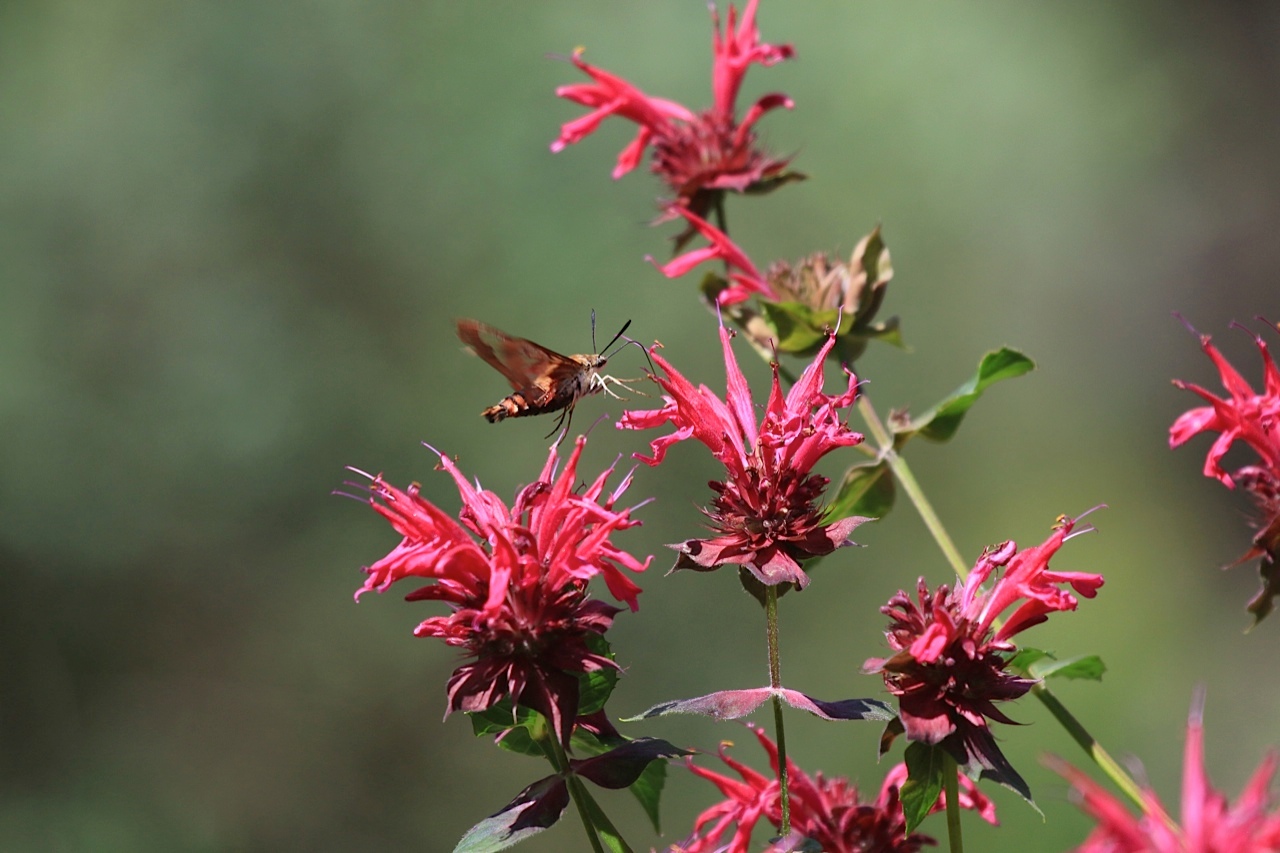
Hummingbird moth
The tiny hummingbird moth looks and acts like a hummingbird- it loves the bee balm too.
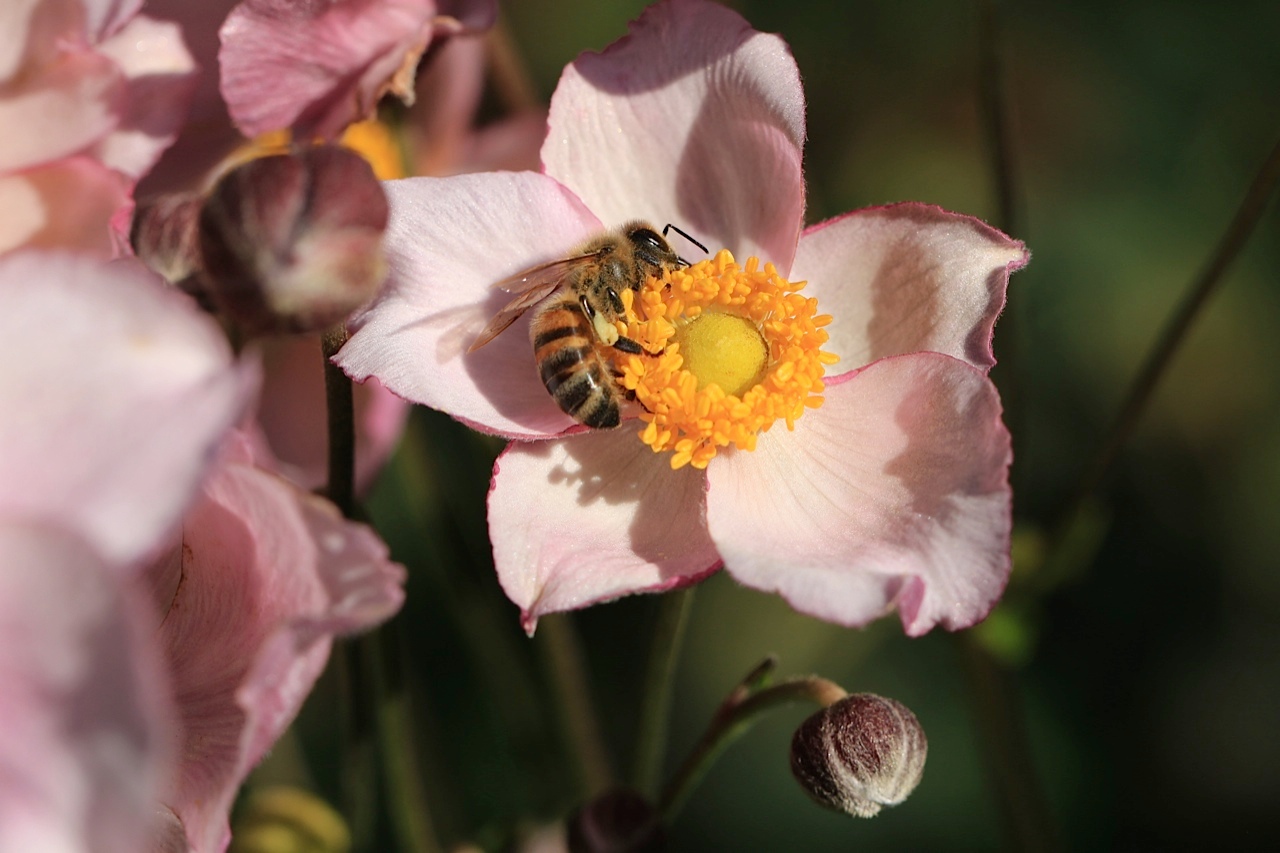
Honeybee on anenome
Our honeybees have their favourite flowers too. This varies throughout the summer, but right now they are all over the anenomes, which are loaded with pollen.
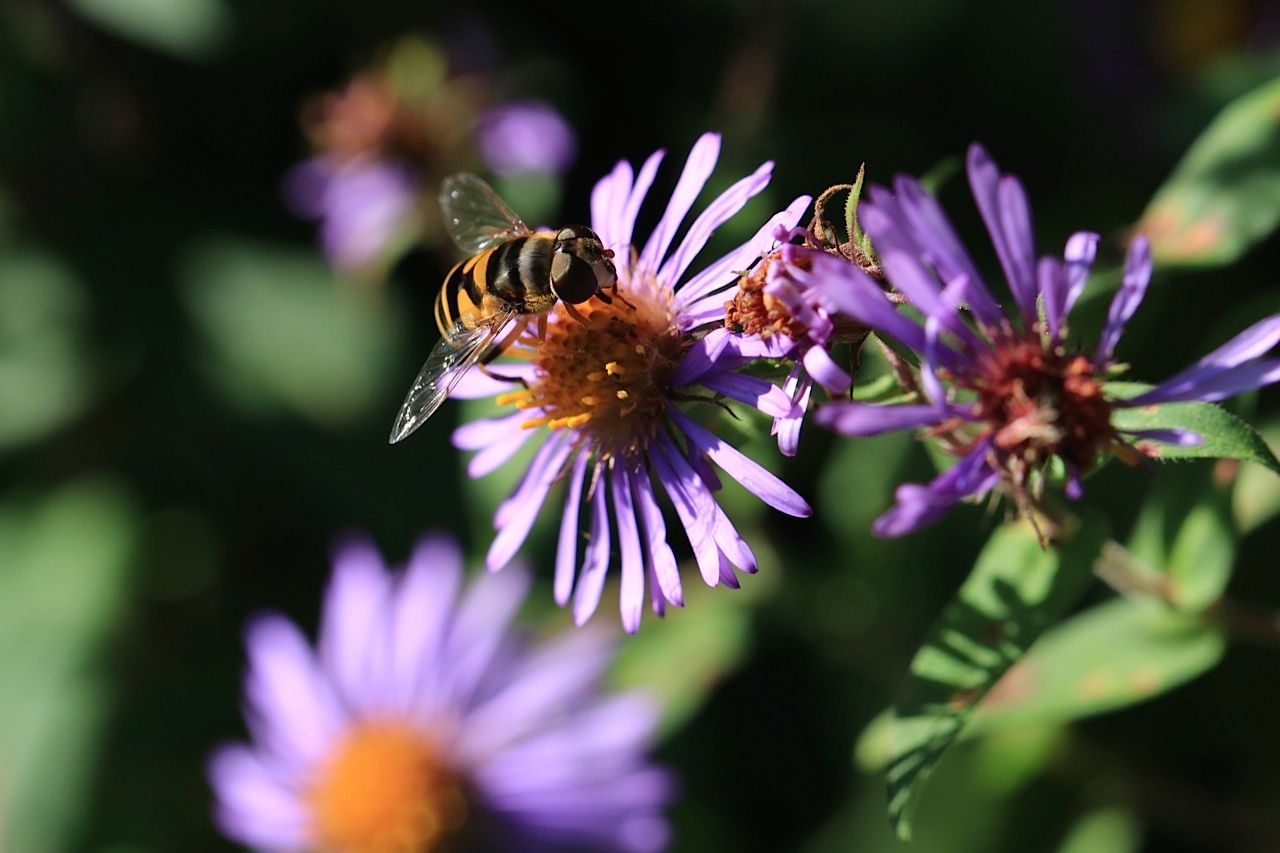
syrphid fly on wild aster
Bee mimics like this syrphid fly are around most of the summer as well.
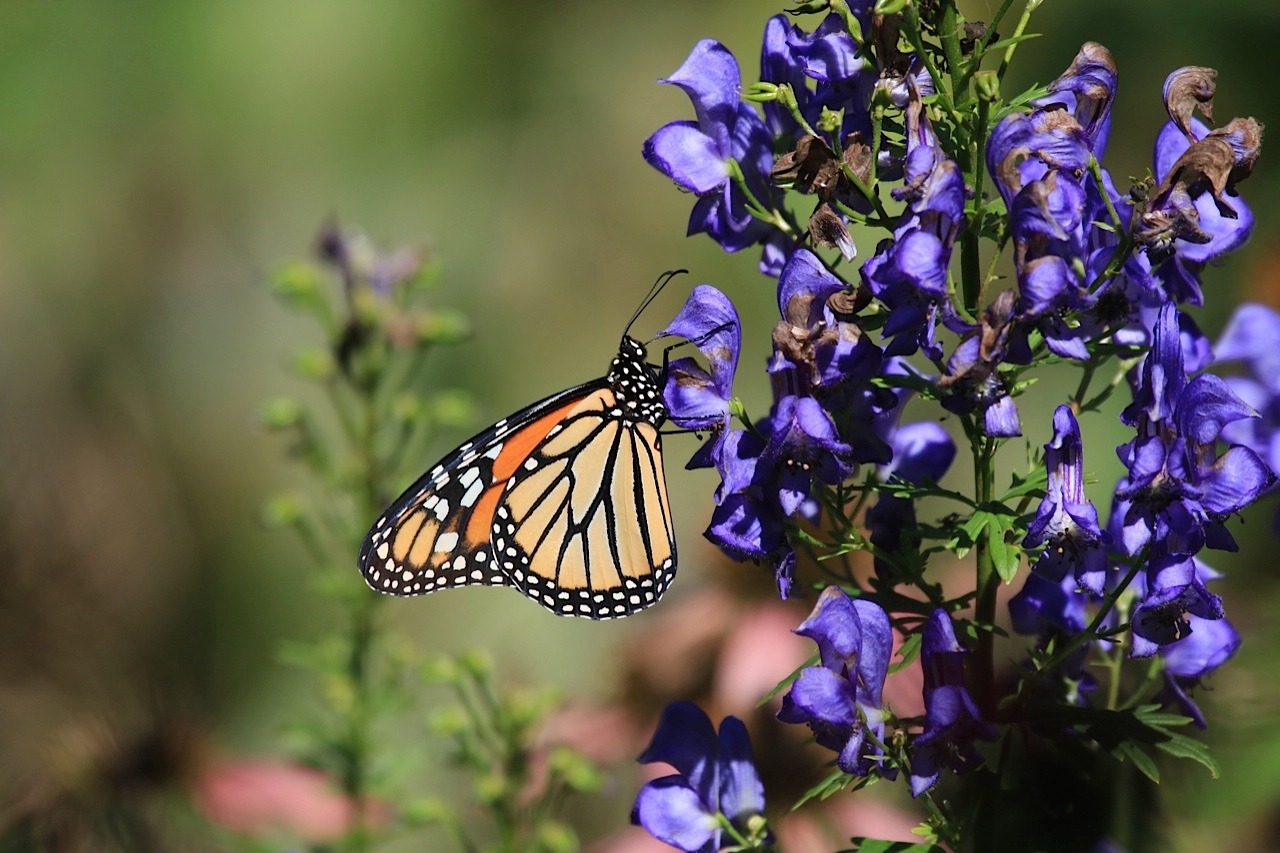
Monarch on monk’s hood
When I step outside on a sunny day from May until October, there are always butterflies in my garden. They make the garden come alive as they flit around with their different shapes, sizes and colours.
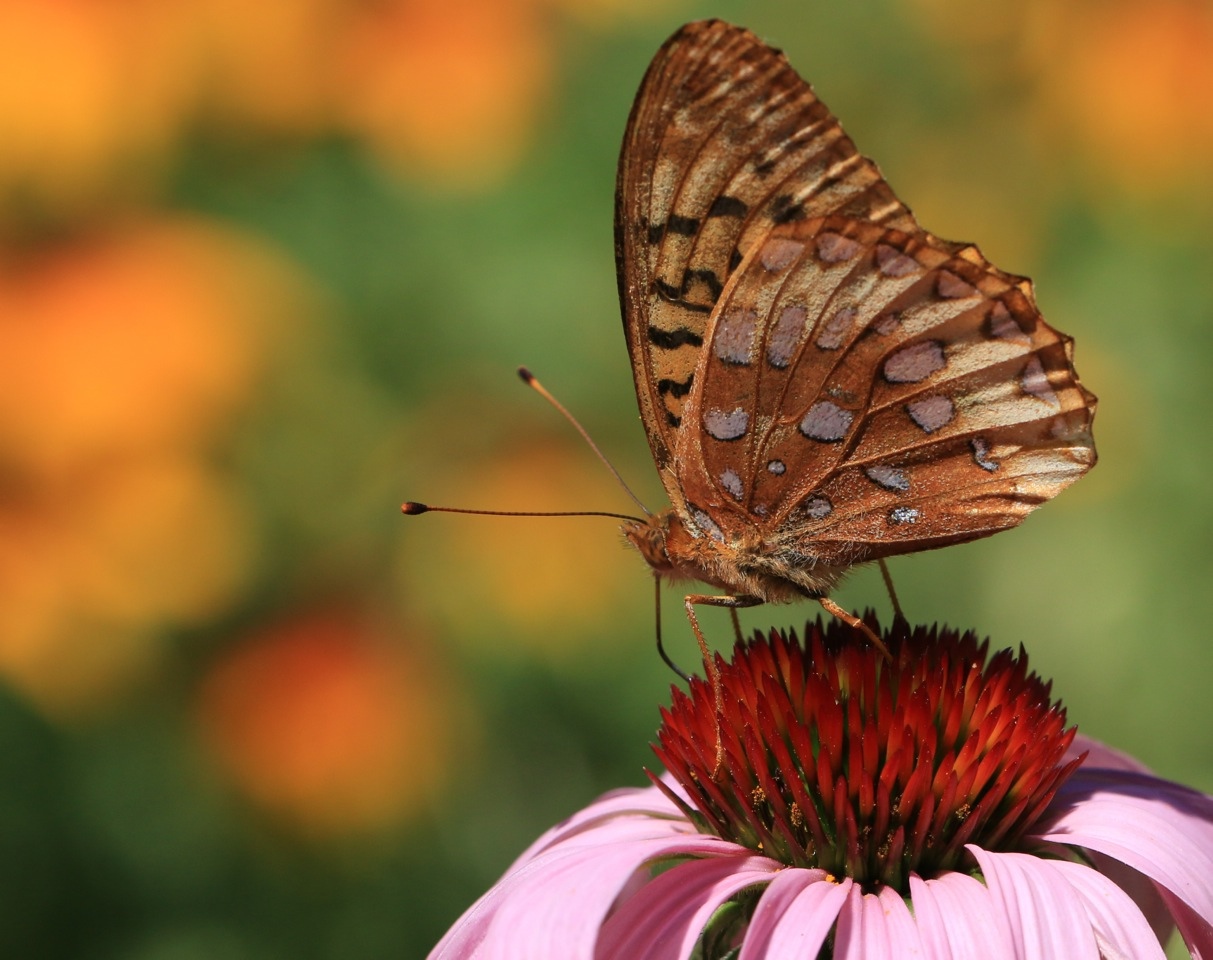
Gorgeous
Butterflies love the purple coneflowers, the sedum, and the bee balm as well.
Philadelphia vireo in an apple tree
Migration season is on right now, and I have had lots of little visitors around the wild edges of my garden.

Red eyed vireo
They are stopping by for a meal of insects on their way south. Native plants host far more insects that are eaten by birds than non-native plants.
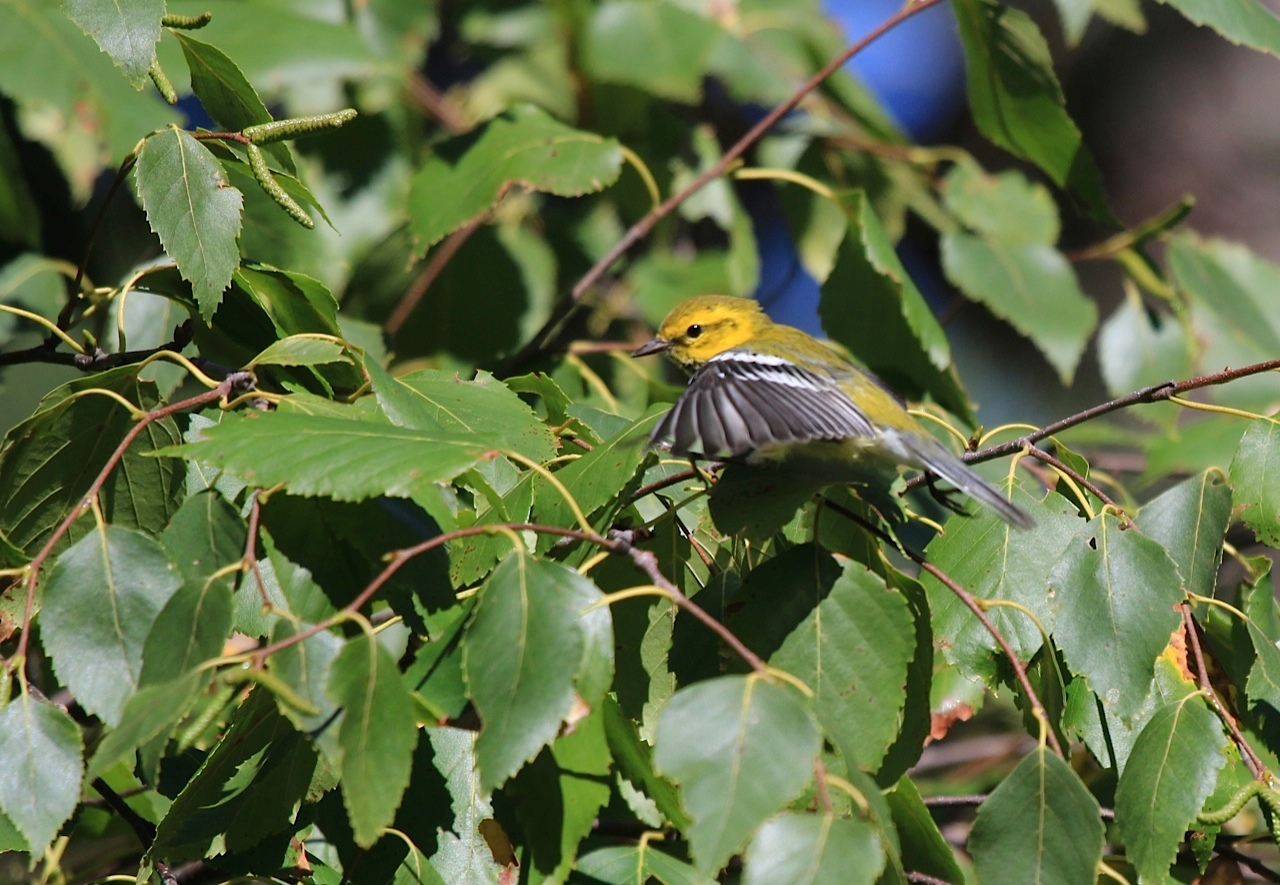
Black throated green warbler
A whole flock of little warblers was eating insects from my birch tree the other morning.
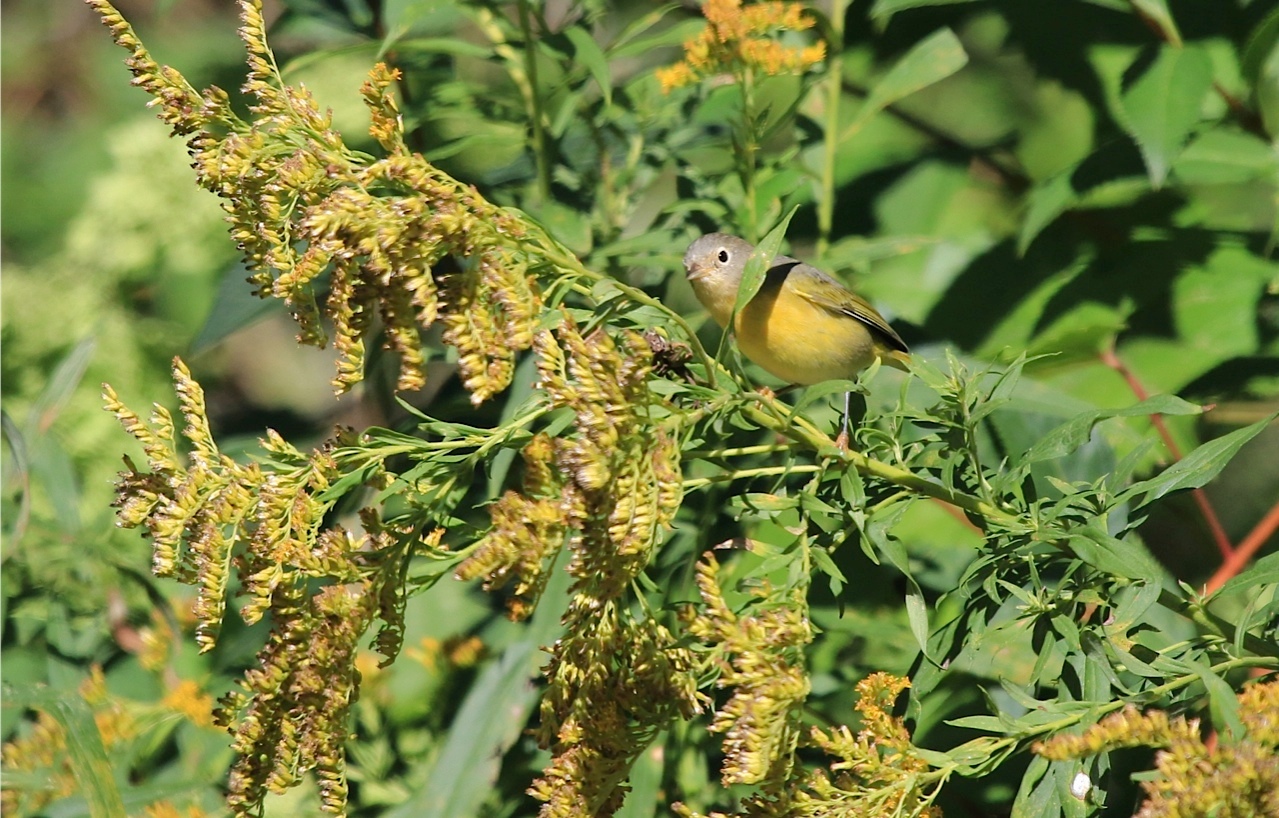
Nashville warbler hiding in the goldenrod
I’ve started to let goldenrod grow right in my flowerbeds. I notice some nurseries are even selling it. The more we can plant species of plants that support the local wildlife in the area, the more wildlife friendly our gardens will be.
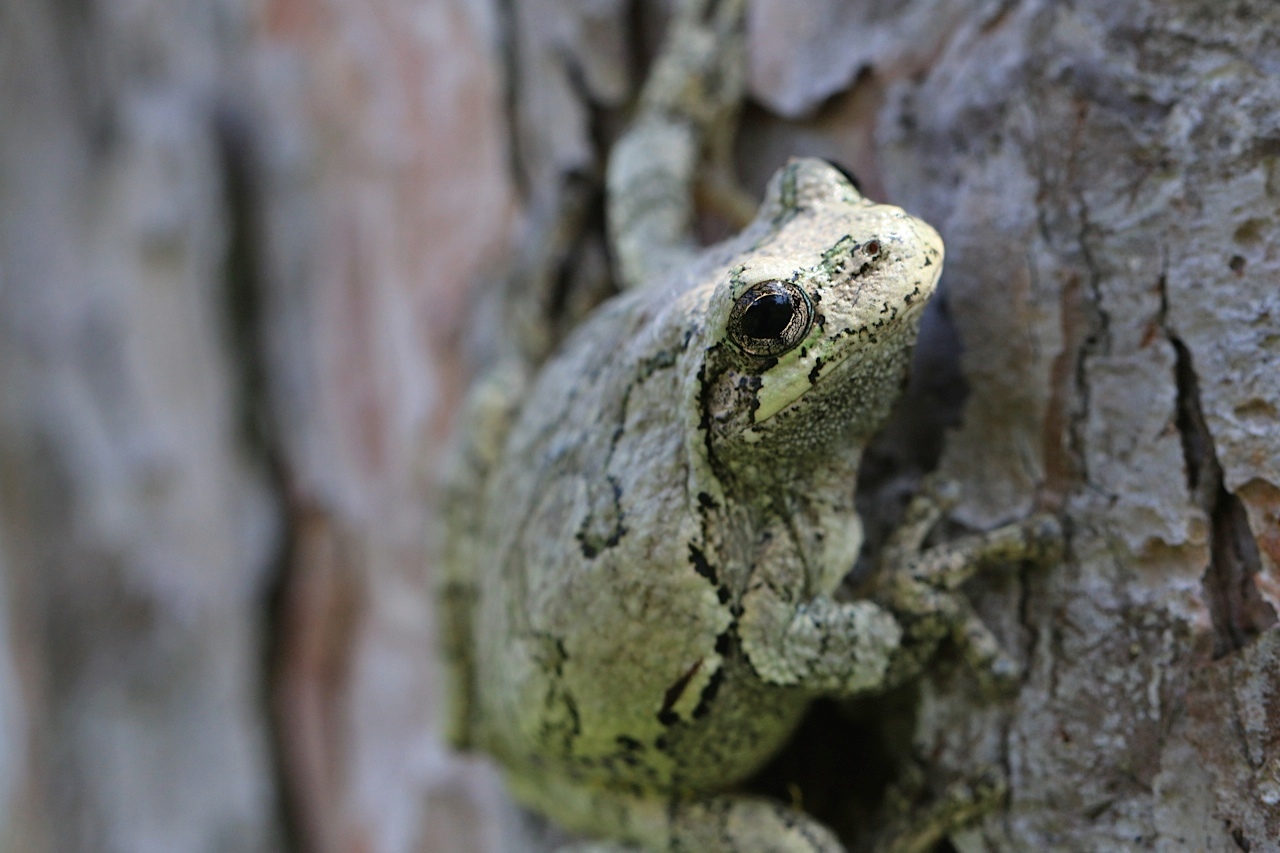
Gray tree frog
You never know who might stop by.
For more on wildlife gardening, see my blog: The Number One Flower for Attracting Just About Everything
To check out a comprehensive planning checklist from Ontario Nature look here.
Happy gardening!
The post The Joys of Gardening for Wildlife appeared first on Leslie Abram Photography.
]]>The post It’s Not a Hummingbird…But What is it? appeared first on Leslie Abram Photography.
]]>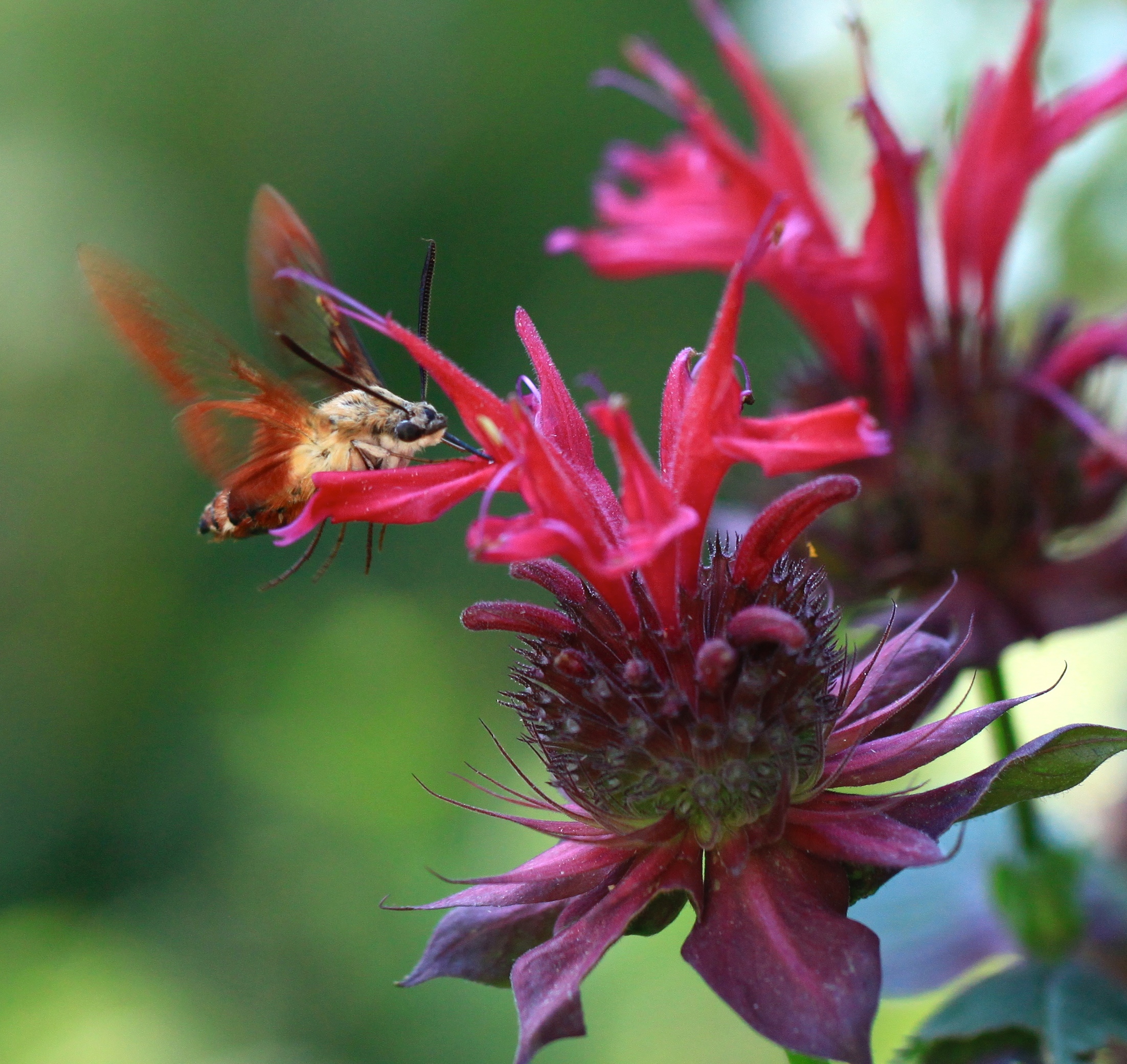
Who are you?
I admit it. The first time a hummingbird moth buzzed past me in my garden, I thought it was a baby hummingbird. I watched closely, trying to follow this speedy little creature as it hovered and zoomed between flowers. I noticed its long curved proboscis curling in and out as it collected nectar from our flowers, and I realized it must be some kind of butterfly or moth.
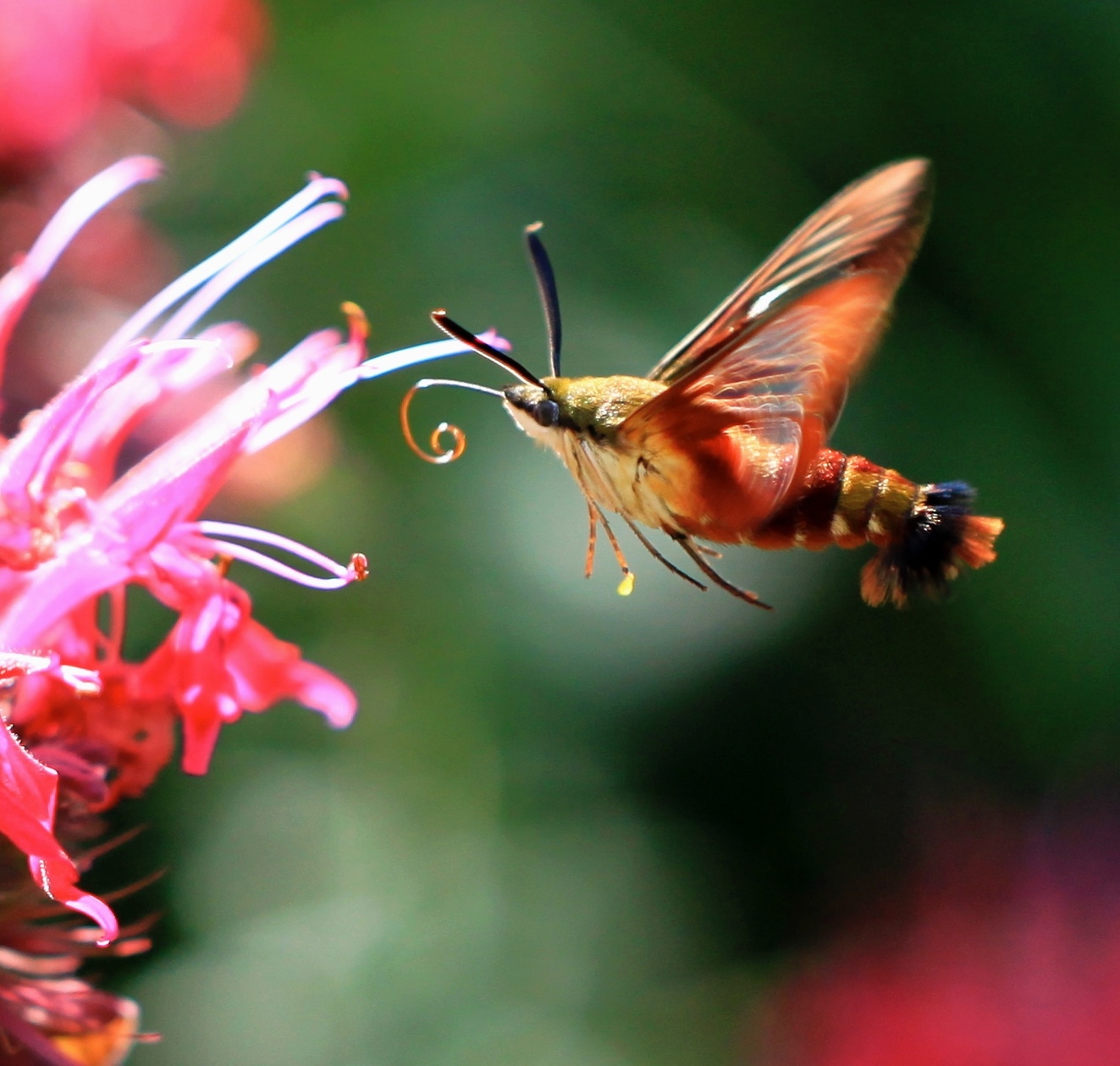
Curly proboscis finds nectar
Meet the Hummingbird Clearwing Moth. Sure enough, these little moths are considered hummingbird mimics, and act in many of the same ways that hummingbirds do. However, their life cycle is completely different, as they are moths, not birds!
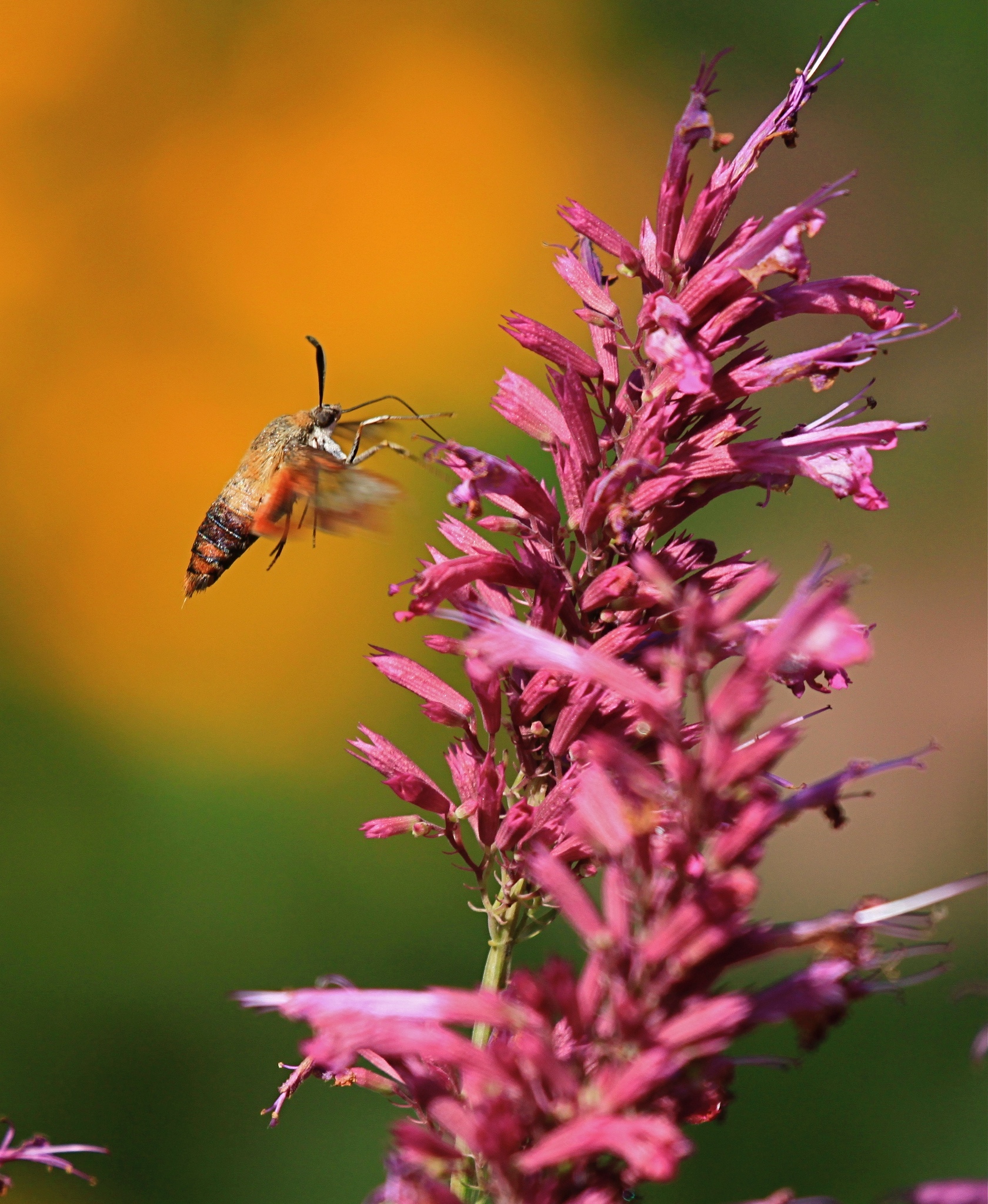
Enjoying some Mexican Hyssop
In the fall, the caterpillars burrow into the soil to spend the winter as a brown, hard shelled pupae. As spring days grow warmer, they emerge as adult moths. The moths lay their little green eggs on the underside of leaves. These eggs will hatch in about a week, and take about four weeks to become full sized caterpillars. In Canada, the moths usually only go through one breeding cycle per year.
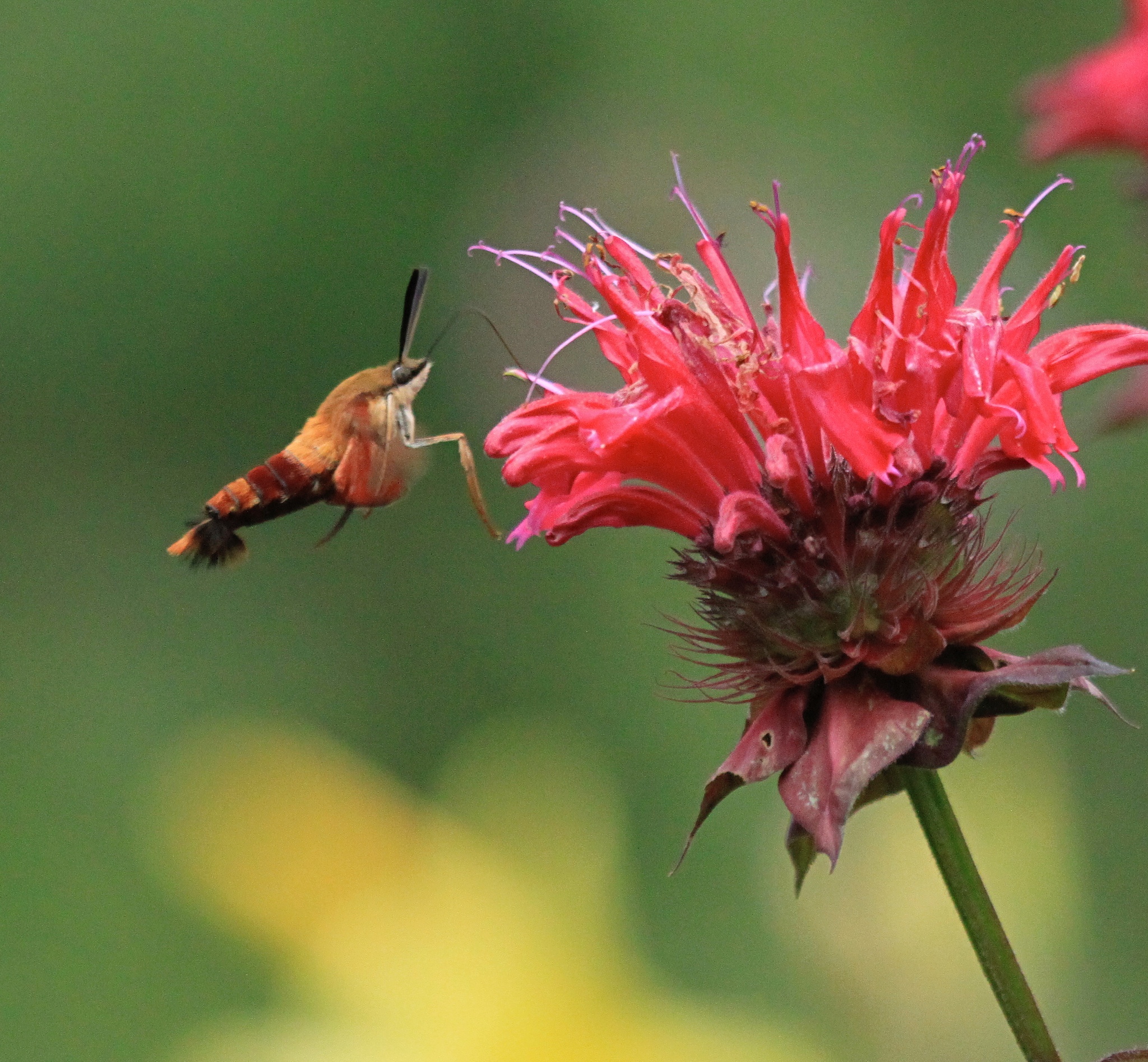
Bee balm is their all time favourite in my garden
Invite Hummingbird Moths to Your Garden. It’s easy! Two very hardy, long-blooming and beautiful flowers are absolute favourites of these beauties. Plant some Red Bee Balm and Mexican Hyssop, sit back, and enjoy the show!
The post It’s Not a Hummingbird…But What is it? appeared first on Leslie Abram Photography.
]]>The post Photo Exhibition to Benefit Local Animal Rescue Group appeared first on Leslie Abram Photography.
]]>Well, hello!
 This weekend I am hosting my second annual photo exhibition, “Small Wonders.” It will be taking a look at the little things in life- insects, baby animals, dewdrops, and the hidden worlds that we often pass by.
 I am very happy to be doing this show as a benefit for a local animal rescue group, “Fixed Fur Life”, and would like to tell you a bit about them. Fixed Fur Life is an incredible group, that has done so much good in our area for improving the lives of stray or abandoned pets, and tackling the major issue of pet overpopulation. As of September 2015, this group had spayed or neutered over 18,800 dogs and cats in our region. They have a dedicated network of people who rescue, foster, and re-home stray or unwanted pets.

This is our kitty Miikka, who we adopted from Fixed Fur Life last year. She is such a sweetie, and SMART! She actually does lots of tricks for a treat, just like a dog would. Plus, she talks all the time. Quite the character.
I know there are so many other wonderful little pets like her out there who need our help.
Here are the details about the show:
Friday, November 20, 4:00 – 8:00 pm
Saturday, November 21, 12:00 – 4:00 pm
Location: Studio Above the Grind, 45 Front Street, Trenton
Refreshments will be served. Donations to Fixed Fur Life gratefully accepted.
If you live in the Quinte/Northumberland area, please share with your friends.
Here’s a link to my Facebook events page, which can be shared: event page
For more information on Fixed Fur Life visit their webpage: FFL
Thanks!
The post Photo Exhibition to Benefit Local Animal Rescue Group appeared first on Leslie Abram Photography.
]]>The post Why We Should All Be Drinking Shade Grown Coffee appeared first on Leslie Abram Photography.
]]>Mmmmmmmm! Coffee! Here in North America, we are addicted to it- consuming over 300 million cups of its deliciousness every day. That is big business. It also means that our coffee drinking choices can have a big impact.
Let me introduce you to shade grown coffee. My hope is that you will become very good friends.

Migrating yellow rumped warbler
Shade grown coffee is grown in the shade of other trees. This traditional coffee-growing method depends on the shade of the forest canopy, which supports local wildlife, our migratory birds, and produces beans of better quality for premium, delicious coffee.
In the 1970s the introduction of a new hybrid coffee plant requiring full-sun exposure led many farmers to cut down their forests and abandon their traditional ways. An environmental nightmare ensued. This sun-grown coffee makes larger beans, and therefore produces twice the yield of shade grown coffee. It uses the robusta bean, and has a more bitter taste. It is a cheaper coffee, and what you would find in cans in the grocery store, and in instant coffee. Sun-grown coffee requires enormous amounts of fertilizer to grow its big beans because there is no leaf litter from large trees above the coffee plants to nourish the soil, and because it lacks the benefit of nitrogen fixing which tree roots provide.

Bay Breasted Warbler
A great majority of our coffee comes from Central and South America, where vast tracts of forest have been cleared for agriculture such as the production of cheap sun-grown coffee, leaving migrating songbirds at a loss for winter habitat.
Devastatingly, the overall population of migratory birds has declined by 40% in the last few decades. A part of this decline can be attributed to the loss of wintering habitat for the birds.
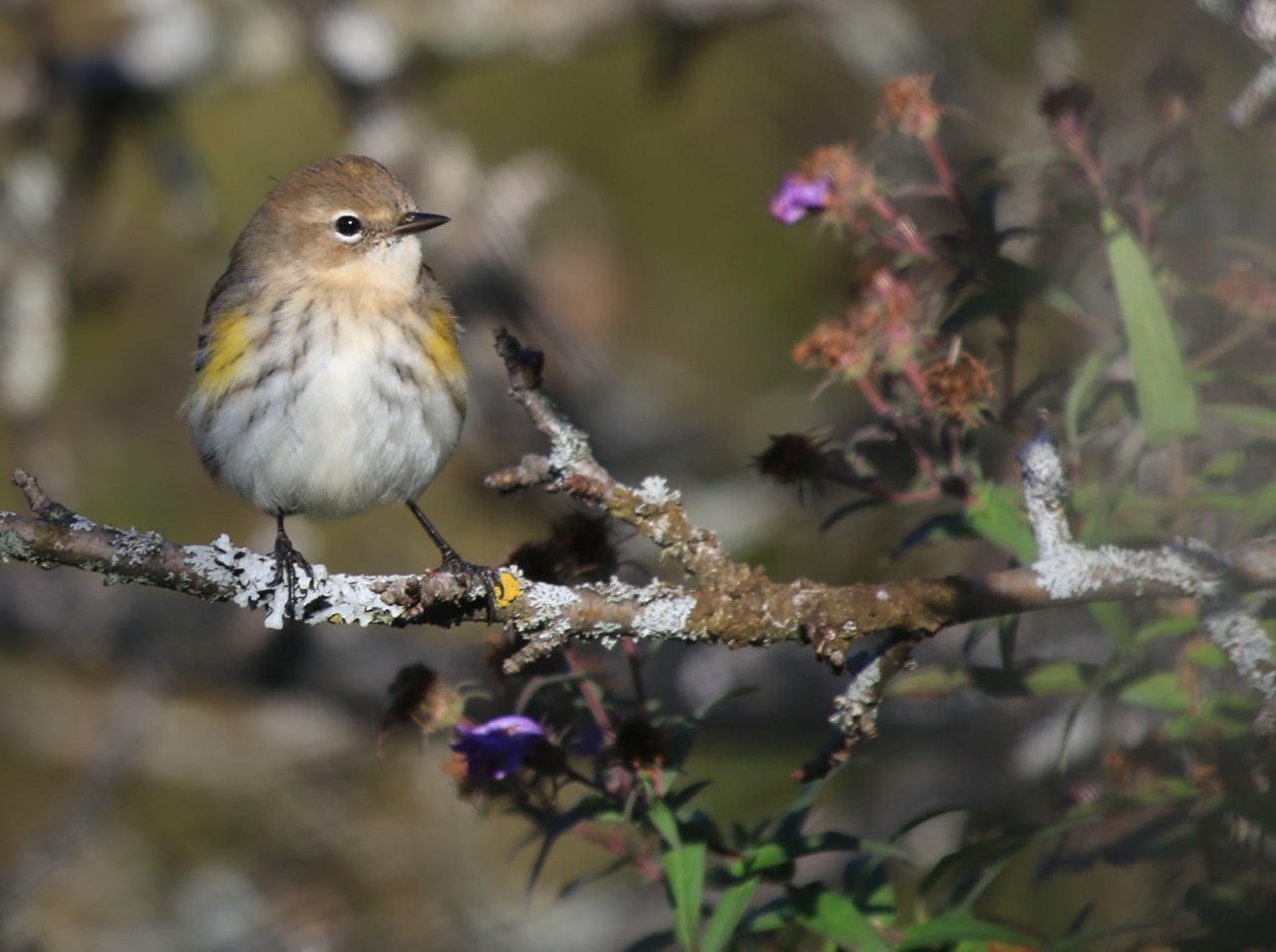
Where am I supposed to go?
Birds are hard-wired to fly south to a certain specific geographical region each year. If they arrive there to find their forest has been cleared, it is not simple a matter of them flying somewhere else to find a suitable place to spend the winter. This means that every time a forest is cleared, there is an immediate impact on that year’s migratory visitors. Though scattered tracts of forest on coffee plantations cannot replace virgin rainforest, they are certainly better than deforestation and monoculture. They give the birds a chance to find a winter territory where they can live, and fuel up for their spring journey north to their breeding grounds.

Black Throated Green Warbler
Plantations that grow coffee under the shade of other trees can help migratory birds, but they have many other benefits as well. Farmers can harvest fruit, nuts, and wood from the other trees in the coffee plantation. The trees also prevent soil erosion, and fix nutrients in the soil so that vast amounts of fertilizer that pollute the soil do not need to be used like in sun-grown coffee plantations. As well, native birds, mammals and insects thrive in the biologically diverse mini forest that these shade grown coffee plantations provide.

Lots to eat here!
The benefit to us is that shade grown coffee tastes so delicious! Sure, sun-grown coffee is cheap, but it doesn’t taste nearly as good. For those of us for whom coffee is an essential part of the morning routine, we might as well make it good. Really good. And by doing so, we can know we are helping migratory birds, as well as the people, the animals, and the environment in Latin America. The higher the demand for shade grown coffee, the more shade grown coffee plantations will be started. It is as simple as that.

Young Rose Breasted Grosbeak
I am often so overwhelmed by all the environmental havoc that people are spreading on this earth, and wonder if there is anything I can do to stop the madness. I am so happy to know that I can make a difference every day just by the coffee I choose to buy. It’s not hard to find – some brands like Kicking Horse are available in grocery stores in the premium coffee section. We had been buying it because it tastes so good, and were relieved to find out that it is shade grown as well. There are also many sources of shade grown coffee available online. Below I have made a list to get you started.
Coffee drinkers can be a powerful force for saving biodiversity in tropical countries, and improving the wintering grounds of our migratory birds.

Knowledge is Power
Yes, knowledge is power. So, here are some sources of shade grown coffee, as well as links where you can find more information.
Prince Edward Point Bird Observatory Shade Grown Nicaraguan Coffee
Kicking Horse Coffee (in supermarkets)
Starbucks: Organic Yukon Blend® and Organic Shade Grown Mexico
It was hard to find any conclusive data on Tim Hortons coffee. They are working with farmers in Columbia and Brazil, two of the leading producers of “Sun coffee” but they are also working with farmers in other countries. They do not claim to be sourcing shade grown beans, but do seem to be educating farmers in more environmentally sustainable growing practices. Jury’s out…
Read more:
Silence of the Songbirds by Virginia Stutchbury

You can make a difference!
Please share this post!
Just as I was writing this blog tonight, two fellow nature photographers commented to me that they hadn’t seen any warblers around this fall. That just made me even more determined to share what I have learned.
Let’s start a conversation and make a difference.
Thank you! Leslie
The post Why We Should All Be Drinking Shade Grown Coffee appeared first on Leslie Abram Photography.
]]>